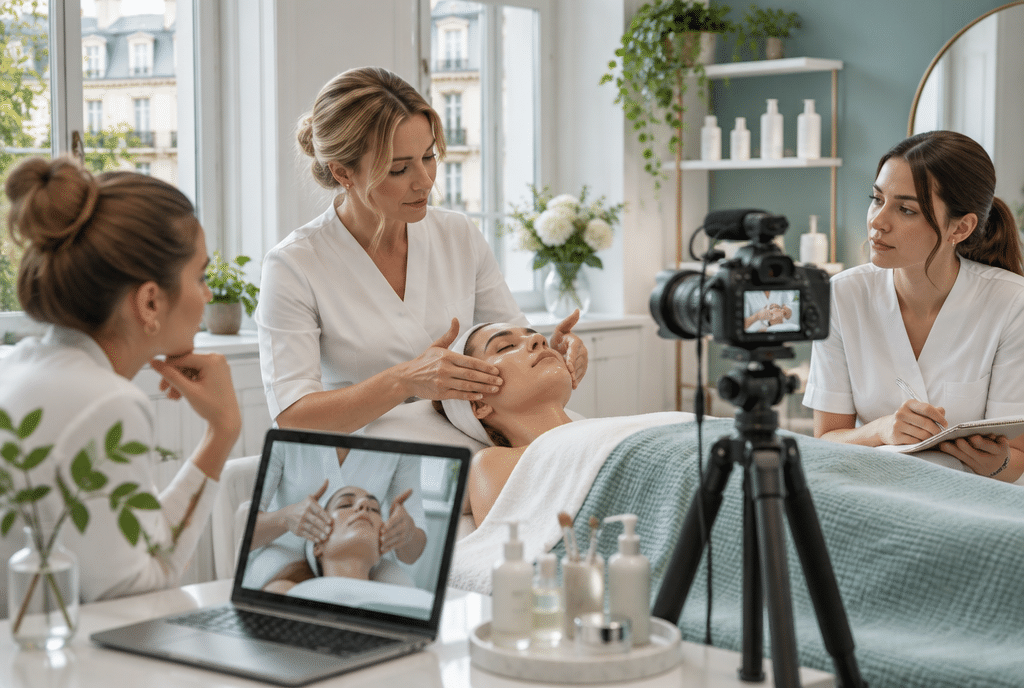
The skin microbiome is the community of bacteria, fungi and viruses inhabiting the epidermis and the openings of the pilosebaceous follicles, and every treatment in the salon changes its living conditions to some degree. Cleansing, a peel and a home-care cosmetic act on the client’s skin together with the microorganisms living on it. The better you understand this relationship, the more accurately you plan a series of treatments and the recommendations for the time between visits.
What the skin microbiome is
The skin microbiome is diverse, because the skin itself is an ecosystem with very different conditions. The review by Grice and Segre published in 2011 in Nature Reviews Microbiology describes how the composition of the microbes colonising it depends above all on the body site, host factors and the environment. An earlier study by this team, covering twenty body sites, showed that sites with similar physiology have similar bacterial communities.
- Sebaceous zones: the forehead, the area behind the ears, the back. Cutibacterium acnes, formerly called Propionibacterium acnes, dominates here, well adapted to life in the lipids of sebum.
- Moist zones: the armpits, the elbow creases, the groin. Staphylococci, including Staphylococcus epidermidis, and coryneforms of the genus Corynebacterium predominate.
- Dry zones: the forearms, the hands. They have the most diverse and least stable bacterial communities.
- Fungi: in a study of fourteen body sites, yeasts of the genus Malassezia dominated on the trunk, head and arms, and the greatest fungal diversity was found on the feet.
For the cosmetologist a practical conclusion follows: the face combines sebaceous zones with drier cheeks, so the skin microbiome in the T-zone and on the jaw looks different. Staphylococcus epidermidis also plays a protective role. Nakatsuji’s team showed that strains of coagulase-negative staphylococci produce antimicrobial peptides active against Staphylococcus aureus, and people with atopic dermatitis had fewer such strains.
Dysbiosis in acne and atopic dermatitis
Dysbiosis is the name for a state in which the skin microbiome differs from healthy skin in the composition or proportions of its microbes. In acne the picture turned out to be more complex than the phrase “acne bacteria” suggested. In a study comparing 49 people with acne and 52 healthy people, the relative abundance of C. acnes was similar in both groups, whereas the strain populations differed. Some strains were associated with acne, others occurred more often on healthy skin.
In atopic dermatitis, sequencing studies in children showed that the share of Staphylococcus aureus rises during flares and correlates with the severity of lesions, and after treatment bacterial diversity increases. Atopic dermatitis is a disease managed by a doctor. The salon’s role lies in gentle care that supports the barrier and in not burdening it further.
The aim of work with acne is to restore balance in the bacterial community. Sterilised skin is quickly recolonised, often with a less favourable composition.
The acid mantle and skin pH
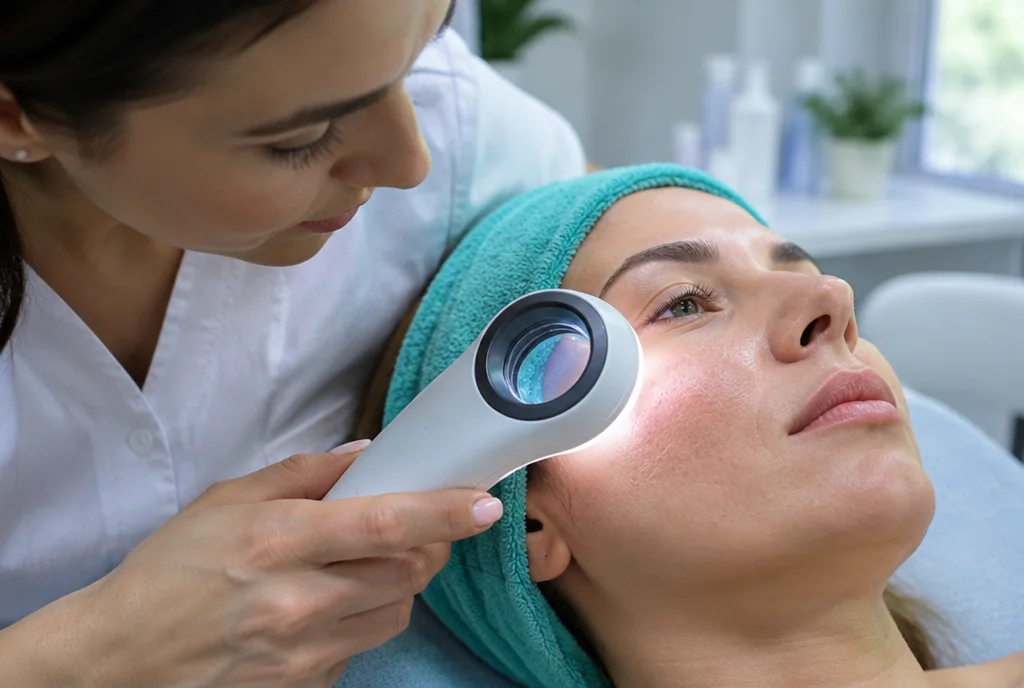
An acidic surface pH helps the skin microbiome keep a stable composition. A multicentre study of 330 people estimated that the natural pH of the skin surface averages 4.7. Skin with a pH below 5 had better barrier and hydration parameters, and an acidic pH maintained the adhesion of resident bacteria. An alkaline pH, from 8 to 9, favoured their detachment. The same data show that tap water alone, with a pH of about 8, raises skin pH for up to six hours.
The review by Blaak and Staib confirms that pH rises after just one wash, and the return to physiological values takes up to several hours. The authors point to cleansing and skincare products with a pH of 4.0 to 5.0 as a solution beneficial to the barrier and the microflora.
- Aggressive cleansing: alkaline soaps, strong detergents and washing several times a day.
- Excessive exfoliation: a granular scrub, an enzyme peel and an acid peel used in the same week.
- Acids too often: salon treatments at short intervals combined with acid toners at home without breaks.
- Random antibacterial products: gels and toners with alcohol or biocides used without an indication.
Prebiotics, probiotics and postbiotics in cosmetics
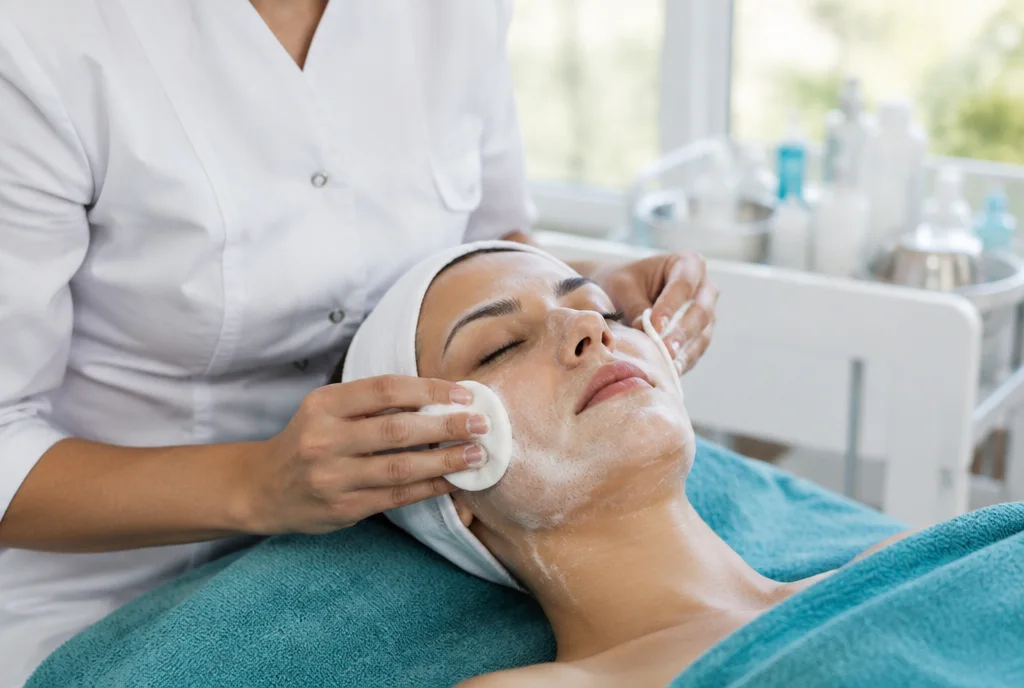
The terms on labels have their scientific definitions. According to the international association ISAPP, a prebiotic is a substrate selectively used by the host’s microorganisms that confers a health benefit. A postbiotic is a preparation of non-living microorganisms or their components, also with a documented benefit. A probiotic means live microbes.
Bacterial lysates and ferments, forms closer to postbiotics, predominate in cosmetics. Keeping live bacteria in a product that contains preservatives is technologically difficult. The state of the evidence is modest: a systematic review from 2020 gathered animal and human studies on topically applied probiotics and identified many areas requiring further research. So talk to the client about support for the barrier and skin comfort. A promise to “rebuild the microbiome” goes beyond what is known today.
The skin microbiome in the salon: protocol and home recommendations
Work with the skin microbiome in the salon starts with the history. Ask what the client washes her face with, how many times a day, how often she uses acids and scrubs at home and whether she uses topical medication. It is worth entering this information on the card we describe in the article on skin diagnostics in the salon. A feeling of tightness after washing, stinging with neutral products and recurring small breakouts often point to an overloaded barrier and a disturbed skin microbiome.
- Intervals between exfoliations: plan the series so that the skin returns to balance before the next treatment. We discuss the rules for choosing concentrations and intervals in the article on chemical peels in the salon.
- Acne-prone skin: combine cleansing with rebuilding the barrier. A series based solely on drying out usually runs out of steam quickly, which we cover in care for acne-prone skin in the salon.
- Closing the treatment: after exfoliation, reach for soothing products with an acidic or neutral pH, with emollients and ceramides.
- Home, washing: a gentle cleanser with a pH of 4.0 to 5.0, once or twice a day, lukewarm water and short contact with the product.
- Home, active ingredients: one exfoliating product in the weekly plan, agreed with the treatment calendar, plus a barrier-supporting cream.
Refer a client with suspected atopic dermatitis, severe inflammatory acne or fungal lesions to a dermatologist. In the salon you support the skin microbiome with skincare, while diagnosis and treatment belong to the doctor.
Salon treatments and the skin microbiome
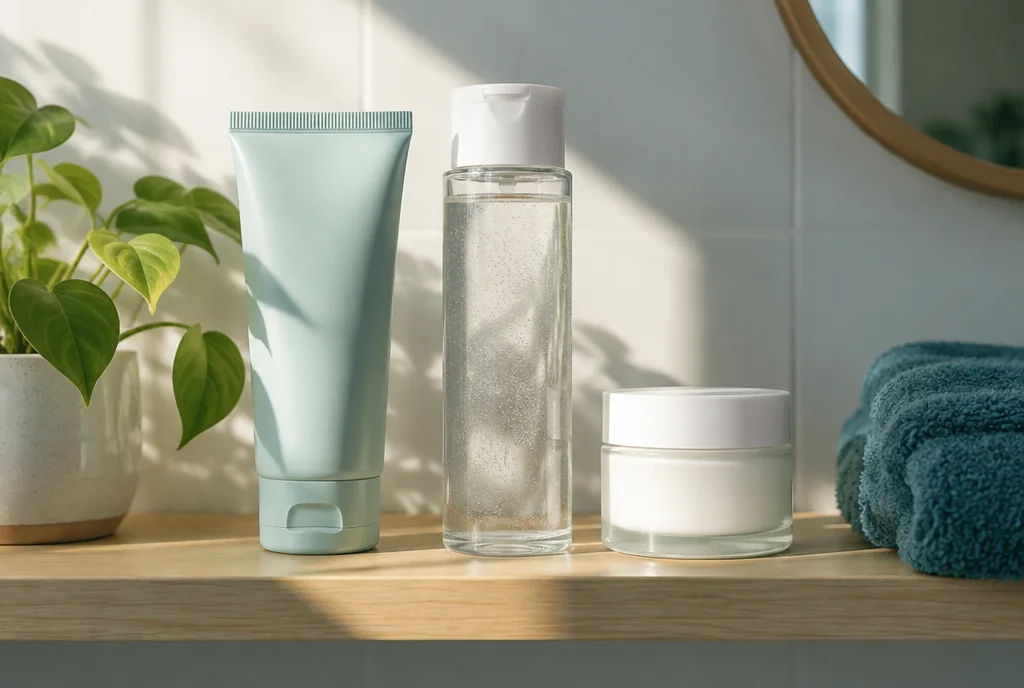
The skin microbiome reacts to every treatment that changes pH, moisture, the amount of sebum or the continuity of the epidermis. The scale of this reaction depends on the technique and on how the skin was prepared. Below you will find the most common procedures from the point of view of the microorganisms living on the client’s skin.
- Manual cleansing: opens the follicle openings and transfers the contents of lesions onto the surrounding skin. You work in gloves, with disposable gauze pads, and at the end you close the treatment with a soothing product with an acidic pH.
- Chemical peels: lower the pH for the time they act, and the shedding of the stratum corneum temporarily removes some microbes together with corneocytes. The skin returns to balance over the following days if it does not receive further acids at home.
- Microneedling: opens channels down to the dermis, so asepsis applies: antiseptic on the skin, a sterile cartridge, a sterile product. Bacteria from the surface of the epidermis should not get deep into the channels.
- LED light: blue light with a wavelength of about 415 nm excites the porphyrins produced by Cutibacterium acnes, which leads to damage to the bacterial cells. That is why it is used in programmes for acne-prone skin, always in combination with barrier-supporting care.
- Occlusive masks and heat: raise the temperature and moisture of the skin surface. With sebaceous skin prone to breakouts, you shorten the occlusion time and choose lighter formulas.
A rule for planning a series follows from this list: one barrier-disrupting treatment per visit and an interval that lets the skin rebuild the conditions for its resident microflora. When combining a peel with microneedling or manual cleansing in one appointment, you first assess the skin’s reactivity to each treatment separately.
A sample series plan for skin with an overloaded barrier
A client with a feeling of tightness, stinging after neutral products and small breakouts first needs rebuilding, and gets exfoliation only at a later stage. The plan below for 6 to 8 weeks assumes visits every 2 weeks and a change of home care from the first day.
- Week 0: diagnostics, baseline measurements, photographs and a soothing treatment without exfoliation. At home the client changes her cleanser to a gentle one with a pH of 4.0 to 5.0 and stops acid toners.
- Week 2: an enzyme peel with a short action time, a ceramide mask, a barrier cream.
- Week 4: check measurements. If TEWL is falling and the stinging has gone, you introduce the first gentle, low-concentration acid peel.
- Week 6 or 8: final measurements, comparison photographs and a maintenance plan with a visit once a month.
During this time the skin microbiome regains stable conditions, because the skin stops receiving further exfoliating stimuli from two sources at once. You modify the plan after each check measurement. When the results worsen, you go back to the week 2 stage and extend the interval between visits to 3 weeks.
The skin microbiome in the salon: hygiene of work and tools
The skin microbiome in the salon also depends on what touches the client’s face: hands, tools, towels and cosmetics. Each of these can carry microbes from one client to another or from one zone of the face to another. Hygiene procedures therefore protect both against infection and against upsetting the balance of bacteria on the skin.
- Cosmetics in jars: you take the product with a clean spatula onto a palette and throw away what is left on the palette. Fingers in the jar contaminate the whole supply.
- Sponges and brushes: a damp sponge used on several clients is an environment where bacteria multiply. Choose disposable pads and gauze, or brushes washed and dried after every visit.
- Towels and headbands: one client, one set, washed at the temperature given by the manufacturer of the textiles and the detergent.
- Testers on the retail shelf: clients apply them with their fingers, so a tester with a pump is safer than a jar, and you hand out samples to take home in sealed sachets.
- Antiseptics: you use them before treatments that break the continuity of the skin and in line with the procedure. On healthy, intact skin in skincare treatments, gentle cleansing is usually enough.
After each client you disinfect the headrest, the worktop and the device handles with a product with bactericidal and fungicidal action. Write these rules into the salon’s hygiene procedure and train the whole team in them. The skin microbiome in the salon depends on repeatability, so every person running treatments carries out the same steps in the same order, regardless of the length of the visit.
How to read the ingredients of cosmetics with a microbiome claim
The claims “microbiome friendly” appear on a growing number of packs. EU law has no definition of such a term. Marketing claims for cosmetics must, however, meet the common criteria of Commission Regulation (EU) No 655/2013, including the criterion of evidential support. The manufacturer should therefore be able to show the study on which the claim on the label is based.
- Postbiotics in INCI: names with the element “Ferment” or “Ferment Lysate”, for example Lactobacillus Ferment, Lactococcus Ferment Lysate, Bifida Ferment Lysate. They denote fermentation products or bacterial lysates, without live microbes.
- Prebiotics in INCI: most often inulin (Inulin) and oligosaccharides, for example Alpha-Glucan Oligosaccharide. The position in the ingredient list shows whether they are present in more than a trace amount.
- Product pH: for cleansing and toning products, ask about the pH value. A product with a pH of 4.0 to 5.0 supports the acidic pH of the skin surface described earlier in this article.
- Surfactants: gentle detergents, for example glucosides, burden the barrier less than sulphates at a high concentration. The whole formulation counts here, and the name of the detergent alone tells only part of the story.
- Fragrance and alcohol: fragrance and alcohol at the start of the INCI list increase the risk of irritation in skin with an overloaded barrier.
Preservatives are sometimes presented in advertising as a threat to the microflora. In a cosmetic containing water they protect the product against the growth of bacteria and fungi after opening, and the list of permitted substances and their maximum concentrations is set out in Annex V to Regulation (EC) No 1223/2009. A water-based product without a classic preservative system needs other protection: single-use packaging, airless packaging or a short period after opening. A microbiologically contaminated cream poses a greater risk to the client’s skin than a preservative permitted at the correct concentration.
When assessing a product for a client with a skin problem, what the formulation lacks also counts. The microbiome of sensitive skin is easier to keep in balance with a shorter ingredient list, one cleansing agent and no added fragrance. Include such an INCI assessment in the consultation when a client brings her cosmetics to the salon.
The treatment series, the season and assessing the result
The team of Oh and co-authors analysed skin samples taken from the same people over months and years. It turned out that the communities of bacteria, fungi and viruses on the skin remained largely stable over time, and people kept their own strains instead of reacquiring them from the environment. The most variability was found on the feet. For the salon this means that each client’s skin microbiome is individual and changes slowly.
You translate this knowledge into planning. A barrier-supporting series usually lasts several weeks, and you assess the result after it ends, with the results recorded on the card. A client who stops the recommended products after two visits and goes back to alkaline soap loses most of the result within a few days.
How to talk to a client about the microbiome
Clients know the term from adverts and often ask about “probiotic” cosmetics or whether their skin is “too clean”. Answer in the language of observation: the skin microbiome depends on pH, the way of washing and the frequency of exfoliation, and the client controls these three things herself at home. Show her the pH measurement before changing the cleanser and after a few weeks, because a number on the card convinces more effectively than a description of an ingredient. At the end of the consultation give her a written washing and skincare plan for the next two weeks, with product names and the time of day.
What you can measure in the salon
You assess the skin microbiome in the salon indirectly, because examining the composition of bacteria requires sequencing in a laboratory. You measure parameters that describe the living conditions of the microorganisms and the state of the barrier:
- Skin surface pH: measurement with a pH meter with a flat electrode, always at the same points and at least a few hours after washing the face.
- Transepidermal water loss (TEWL): a fall in the value in successive measurements means the barrier is rebuilding.
- Hydration of the stratum corneum: measurement with a corneometer in the T-zone and on the cheek.
- Sebum: measurement with a sebumeter on the forehead and chin, useful for acne-prone and combination skin.
- Photographs and diary: photographs in constant light and the client’s notes on stinging, tightness and new breakouts.
Take measurements after at least 15 minutes of the skin adapting in the room, at a similar time of day. In winter, low air humidity in heated interiors encourages dryness, and in summer sweat and sunscreens change the conditions on the skin surface, so compare results with the same season of the previous year if you have been looking after the client for longer. Agree with her at the start of the series that the result of the work is calmer, less reactive skin and stable measurements.
For clients you look after all year round, also record on the card changes in home care and in health: a new cleanser, a dermatological course of treatment, antibiotic therapy, a longer trip to a different climate. Each of these changes affects the conditions on the skin surface and explains sudden deviations in pH or TEWL measurements. The skin microbiome reacts to them with a delay, so assess a result worse than at the previous visit together with a note on what happened in recent weeks. Such a record protects you from changing the protocol hastily when the cause of the deterioration lies outside the salon, and makes it easier to talk to the client about what she can do herself at home. After a course of medication ends, take new baseline measurements and compare subsequent results with that reference point.
The most common questions about the skin microbiome
Does a chemical peel destroy the skin microbiome?
A single treatment performed according to the protocol changes the conditions in which the skin microbiome lives only temporarily. The problem arises with accumulation: frequent acids in the salon, toners at home and strong washing all at once.
Do cosmetics with probiotics contain live bacteria?
They usually contain lysates or ferments, that is ingredients of bacterial origin. Check the INCI list for names such as “Lactobacillus Ferment” or “Bifida Ferment Lysate”.
How often should a client wash her face?
For most skin types, morning and evening is enough, with a gentle, slightly acidic product. More frequent washing raises pH and lengthens the time it takes to return to normal.
Can the skin microbiome be tested in the salon?
Examining the composition of bacteria requires taking a swab and sequencing in a laboratory. In the salon you assess pH, TEWL, hydration and sebum indirectly, and record the results on the client card at every visit.
Does blue LED light harm the skin microbiome?
Blue light acts above all on Cutibacterium acnes, which produces porphyrins. You support the skin microbiome in acne-prone skin by combining light exposure with gentle washing and barrier-rebuilding care, in line with the parameters given by the device manufacturer.
For the salon in brief: the skin microbiome differs between the sebaceous, moist and dry zones, and its balance is supported by an acidic pH of about 4.7. It is disturbed by alkaline washing, accumulated exfoliation and acids used too often. Treat prebiotics and postbiotics as support for the barrier, and make the history of home care a permanent part of diagnostics.
Would you like to plan a treatment series and home recommendations with the skin barrier in mind? Book a free consultation and read how to plan care after aesthetic treatments.