
Chemical peels are the foundation of a profitable salon offer, because they answer clients’ most common needs: tone, smoothness, hyperpigmentation and combination skin. This is also an area where it is easiest to make two mistakes at once: working without a system and without awareness of where the cosmetologist’s scope ends. This article puts both in order, basing the choice of acids on evidence and the limits on the current legal position.
How peels work and what divides them into classes
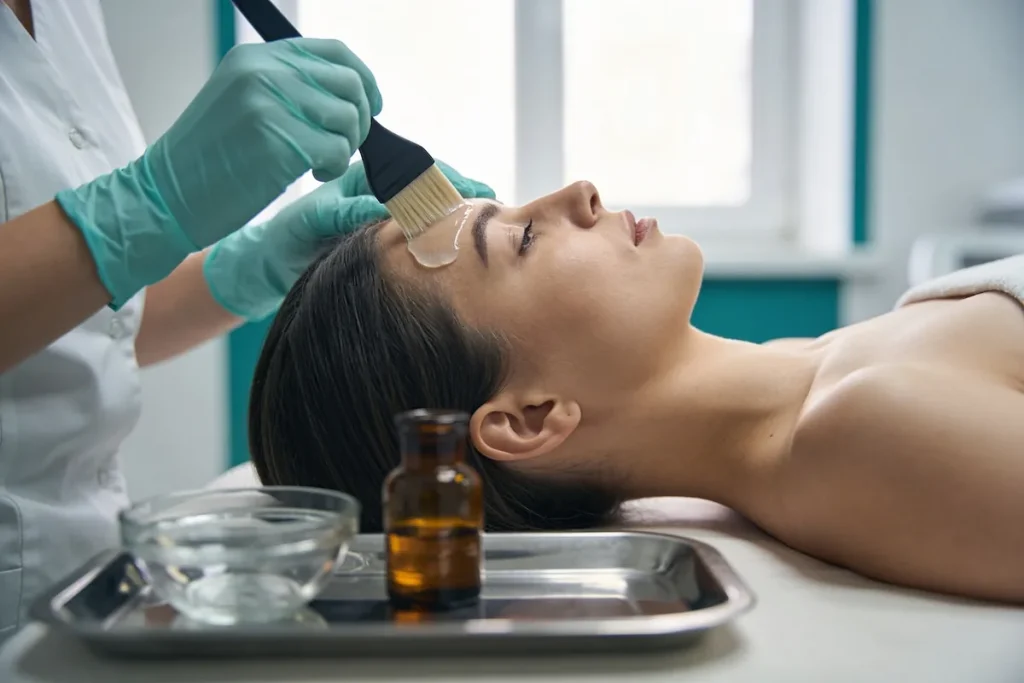
A chemical peel exfoliates the skin with acid in a controlled way, stimulating renewal of the epidermis and repair processes. What is key is how deep it reaches, because both the results and who may perform it depend on that. Dermatological classifications divide peels into very superficial, superficial, medium-depth and deep, depending on the level they reach, which is concisely set out in a publication in Cosmoderma. A beauty salon works in the area of superficial peels and builds a safe, repeatable offer on them.
A superficial peel is the cosmetologist’s tool. A medium-depth or deep peel already belongs in a doctor’s practice. This line protects both the client and you.
Choosing the acid for the indication, based on evidence
A review of the use of peels in pigmentary disorders, published in 2025 and available in the NCBI database, indicates that in routine cosmetic practice superficial glycolic and salicylic acid peels offer the best balance of efficacy, tolerance and versatility, and work best as part of a wider plan, not as a miracle on their own. A review of peels in active acne, available in PubMed, in turn describes glycolic acid as well tolerated and safe, and salicylic acid peels as more convenient and faster-acting in people with darker skin.
- Mandelic acid: gentle, safe for sensitive and redness-prone skin, good for starting a series.
- Glycolic acid: the best studied in work on tone and hyperpigmentation, introduced gradually.
- Salicylic and mandelic-salicylic acid: oily and combination skin, blackheads, well tolerated in darker skin.
- Azelaic acid: support for acne-prone and redness-prone skin and for evening out tone.
- Lactobionic acid and PHA: hydration and delicate exfoliation where stronger acids irritate.
You will find coherent peel systems, from brands such as Derme de beauté or M.A.D Skincare, among the professional cosmetics in Este Sklep. We write more about the brand itself in the article on M.A.D Skincare.
Where the cosmetologist’s scope ends
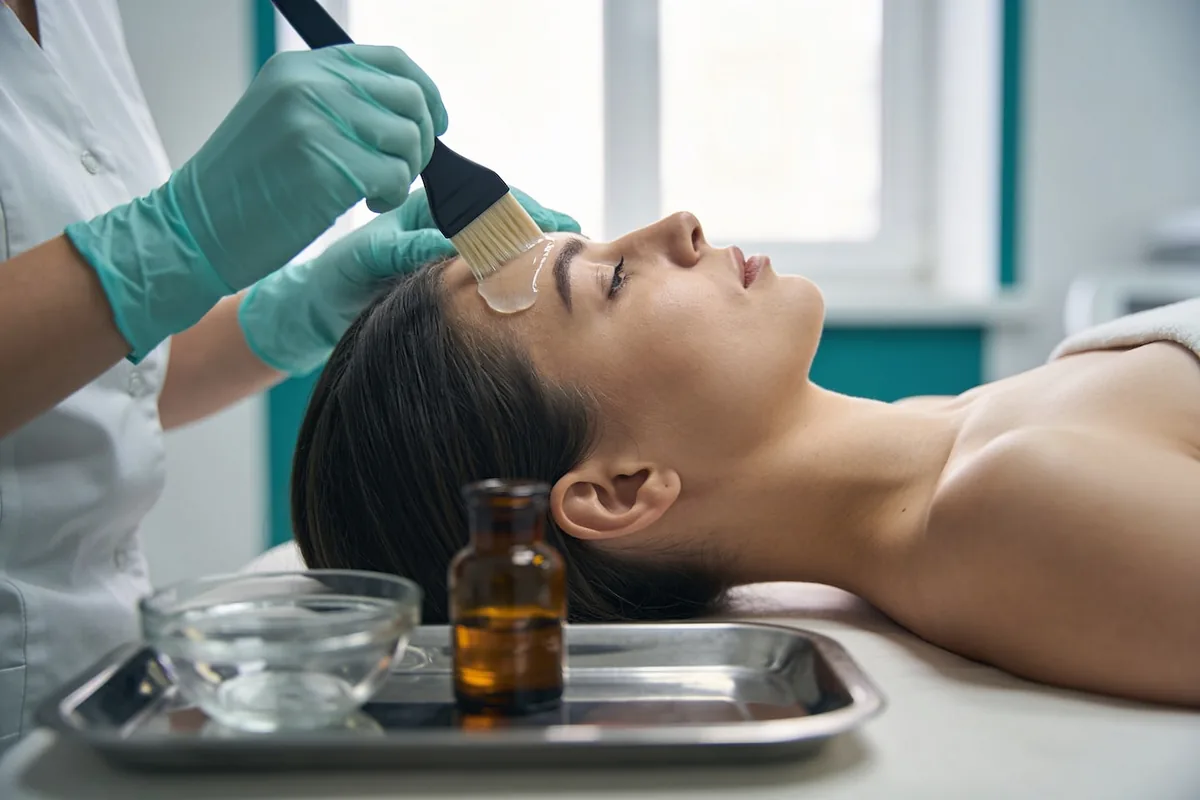
This is the most important passage in this article. Superficial peels work within the epidermis, and that is the scope a beauty salon covers. Products that go below the dermal-epidermal junction and formulas with a very low pH require different treatment conditions. Work within the scope of superficial peels, keep a treatment card and describe the result you really achieve in a series. Such precision builds the credibility of your offer.
Peels as a series that earns
A single peel rarely gives the full result, and the reviews cited stress the role of a series and of sun protection. So sell a series, not a treatment: the standard is four to six peels every two to three weeks, completed with home care and strict sunscreen use. It is the home-use cosmetics that decide the outcome and at the same time open up retail sales, which we cover in the article on retail sales in the salon.
Preparing the skin and the safety of the series
The safety of peels starts before the first treatment. Take the history, check contraindications and establish what the client uses at home, because strong retinoids, recent exfoliating treatments or recent sun exposure change the skin’s reaction. With sensitive skin and darker skin, build concentrations gradually, starting with gentler formulas, and watch the reaction between visits instead of forcing a strong protocol straight away. The reviews cited point out that combining acids excessively or layering too aggressively increases the risk of irritation and post-inflammatory hyperpigmentation, especially when the barrier is weakened. That is why a sensible plan is one coherent line of peels, a gradual increase in strength and strict sun protection after the treatment, because it is the lack of sunscreen that most often ruins the result of a series and causes hyperpigmentation. Record on the treatment card the product used, the concentration and the exposure time, so that you can build subsequent visits deliberately and respond if the skin reacts more strongly than usual.
The most common questions about chemical peels
Which acid should I start with if I am only just introducing peels?
With formulas that carry a lower risk of irritation: mandelic acid, lactobionic acid and enzyme peels. They let you build experience and clients’ trust before you reach for stronger protocols.
How many treatments are needed to see a result?
A refresh is often visible after the first treatment, but a lasting improvement in the tone and structure of the skin usually requires a series of four to six peels combined with home care.
Are peels safe in summer?
Yes, provided you choose gentler protocols, avoid the strongest acids in the period of intense sun and strictly keep to sun protection. The risk in summer is above all post-inflammatory hyperpigmentation, when freshly exfoliated skin meets the sun without sunscreen. That is why with acid series a high-protection sunscreen, used daily and reapplied, is not a recommendation but a condition of a lasting result. Many salons shift the emphasis in summer to gentler acids and skincare, and plan stronger protocols for the cooler part of the year. Sunscreen applies all year round anyway, not only in the holidays.
For the salon in brief: chemical peels are a year-round, profitable service backed by evidence. Work with one brand’s system, match the acid to the indication, stay within superficial peels and sell a series with home care.
Would you like to add acids to your menu or put your current protocol in order in line with current knowledge and regulations? Book a free consultation and see the peel systems in Este Sklep.