Hyaluronic acid: the molecular weight of this ingredient decides whether, in a cosmetic, it stays on the surface of the skin as a film or partly penetrates the epidermis. The label usually carries the single word “hyaluron”, and behind it are chains whose length can differ by a factor of several dozen. This article describes hyaluronic acid in cosmetics for topical use, that is serums, ampoules and creams, and leaves out fillers given by injection.
Hyaluronic acid: molecular weight in kilodaltons
Hyaluronic acid is a linear polysaccharide built of repeating disaccharide units: glucuronic acid and N-acetylglucosamine. It occurs naturally in the skin, and in the body its chains reach enormous sizes. Chain length is expressed as molecular weight in kilodaltons (kDa). Manufacturers of the raw materials from which hyaluronic acid in cosmetics is made divide the chains conventionally into three groups, and the boundaries between them are drawn in different ways.
- High molecular weight: chains counted in hundreds and thousands of kDa, forming a flexible, water-binding film on the skin.
- Medium molecular weight: intermediate fractions, combining some film-forming properties with slightly lower viscosity.
- Low molecular weight: shorter chains, of the order of several tens of kDa, usually obtained by hydrolysis.
- Oligomers: very short fragments made up of a few to a dozen or so disaccharide units.
The biology of these fractions differs. A review published in the European Journal of Cell Biology describes how large hyaluronan polymers play a structural role in tissues and act as anti-inflammatories, while small fragments can pass pro-inflammatory signals to cells. That is why the choice of fraction in a formula matters beyond hydration alone, and the question about hyaluronic acid in cosmetics and the molecular weight of the raw material used is fully justified.
A film on the surface or penetration into the epidermis
The most frequently cited clinical study comparing hyaluronic acid in cosmetics at different molecular weights is the 2011 paper by Pavicic and colleagues, published in the Journal of Drugs in Dermatology. Seventy-six women aged 30 to 60 used, twice a day for 60 days, a cream with 0.1% hyaluronic acid at one of five molecular weights: 50, 130, 300, 800 or 2000 kDa. A cream with no active substance was applied around the other eye.
All fractions improved skin hydration and elasticity compared with placebo. The reduction in wrinkle depth proved significant only in the 50 and 130 kDa groups. The authors link this to better penetration of shorter chains, wording it cautiously as a possible explanation without a proven mechanism. In a parallel study on a reconstructed epidermis model, published in Skin Pharmacology and Physiology, the fraction of around 50 kDa penetrated better than the larger ones and, in measurements of TNF-α expression, showed none of the pro-inflammatory action suspected of the smallest fragments. The first author of that paper represented a manufacturer of cosmetic raw materials, which has to be taken into account when interpreting the results.
High molecular weight hyaluron works on the surface, low molecular weight partly penetrates. A good formula combines both levels.
How to read the INCI of hyaluron on the label
The INCI name under which hyaluronic acid appears in cosmetics tells you the chemical form but does not give the molecular weight. The same words can mean different raw materials, so the ingredient list is only the starting point.
- Sodium Hyaluronate: the sodium salt of hyaluronic acid, the most common form in cosmetics. It can have any molecular weight, from low to very high.
- Hydrolyzed Sodium Hyaluronate: sodium hyaluronate cut into shorter chains by hydrolysis. It indicates a low molecular weight fraction or oligomers.
- Hydrolyzed Hyaluronic Acid: the analogous, hydrolysed form of the acid, also with shortened chains.
- Sodium Acetylated Hyaluronate: an acetylated derivative with a greater affinity for epidermal lipids, described by suppliers as adhering better to the skin.
The presence of two or three of these names in one ingredient list suggests a multi-fraction formula. When talking to a supplier, put the question directly: hyaluronic acid, the molecular weight of each fraction and its share in the formula. Certainty comes only from the technical data sheet, in which the manufacturer gives ranges in kDa. We describe the set of things you look at when assessing skin before choosing a preparation in the article on what science understands by skin quality.
Hyaluronic acid in cosmetics: concentrations and the thousand-times myth
Hyaluronic acid in cosmetics usually appears at concentrations of 0.1 to 2%. Higher values quickly raise viscosity and can leave a sticky, tightening layer on the face. In the Pavicic study the results were obtained at 0.1%, so a high number on the packaging in itself says little about effectiveness. What matters more is which fractions were used and whether the formula prevents water from evaporating.
In marketing descriptions promoting hyaluronic acid in cosmetics, the claim keeps returning that hyaluron attracts a thousand times more water than it weighs. That number concerns the behaviour of the molecule in solution and is passed on without indicating the measurement it refers to. Something else matters for the skin: hyaluronic acid in cosmetics acts as a humectant, meaning it binds the water available in its surroundings. Two practical rules follow from this.
- Damp skin: a serum applied to a slightly dampened face, after a toner or mist, has water to bind.
- Occlusion in dry air: in heated rooms and low humidity, cover hyaluron with an emollient cream that limits water evaporation from the epidermis.
Hyaluron in the salon: after a treatment and in the protocol
Hyaluronic acid in salon cosmetics most often plays a calming and hydrating role. It works well after treatments that temporarily weaken the epidermal barrier: after chemical peels, cleansing or microdermabrasion. A mask or serum with a high molecular weight fraction then limits water loss and gives the client comfort from the first minutes. We describe the rules for choosing preparations for the following days in the article on care after aesthetic treatments.
The second use is mesotherapy ampoules, used in microneedling mesotherapy performed with a device. Microchannels make it easier for ingredients to penetrate, so at this stage use only hyaluronic acid in cosmetics intended by the manufacturer for work with microneedling, sterile and in single-use packaging. A home-care cosmetic, even one with an excellent formula, is not suitable for this purpose.
Hyaluronic acid in cosmetics and skin type
Hyaluronic acid in cosmetics is well tolerated by almost all skin types, because the ingredient itself rarely irritates. Whether a product will suit a specific client is decided by the rest of the formula: the base, emollients, preservatives, fragrance. Before you recommend a serum, distinguish two states that clients often confuse. Dry skin has too few lipids; dehydrated skin has too little water in the stratum corneum and can still be oily in the T-zone.
- Dehydrated, oily or combination skin: a light serum or gel with several hyaluron fractions, without heavy oils. In the evening a thin layer of a light emulsion limits water evaporation.
- Dry skin: hyaluron as a layer under a cream with ceramides, cholesterol and oils. A hydrating serum alone, without cream, gives only brief comfort here.
- Sensitive and vascular skin: a formula without fragrance and without a high share of denatured alcohol. A predominance of the high molecular weight fraction, which works on the surface.
- Skin prone to blackheads: hyaluronic acid itself is regarded as a non-comedogenic ingredient, and the risk of blackheads is linked to the product’s base. Check the ingredient list for heavy oils and waxes high in the INCI order.
- Mature skin: multi-fraction formulas, combined with peptides or a retinoid in separate steps, with a nourishing cream at night.
The question of molecular weight matters most for reactive skin. For a client with vascular skin or after a treatment, choose hyaluronic acid in cosmetics with a dominant high fraction, because in some in vitro studies the smallest fragments showed signalling activity associated with inflammation. In formulas for stable skin, an admixture of the low fraction adds the smoothing effect described above in the Pavicic study.
Clients with oily skin often give up hydration for fear of shine. Hyaluronic acid in cosmetics with a gel texture absorbs quickly and leaves a matt finish, so with this group it is easy to introduce it into morning skincare under sunscreen.
In summer, when air humidity is high, hyaluronic acid in cosmetics with a light formula is often enough instead of a cream for clients with oily skin. In winter the same client needs an emollient layer, because in heated rooms humidity falls and water escapes from the epidermis faster. Discuss the change of skincare plan at the first visit after the heating season begins.
Hyaluronic acid in cosmetics combined with other ingredients
Hyaluronic acid in cosmetics combines with most active ingredients, which is why it often plays a soothing role in a protocol. When arranging skincare, be guided by the texture and pH of the products: first the thinnest water-based formulas, then a serum of thicker texture, and finally cream and, in the morning, sunscreen. You apply hyaluron in a serum after toner and before oily products, which seal water in the epidermis.
- With niacinamide: a compatible combination, often in one formula. Niacinamide supports ceramide synthesis, hyaluron binds water, so the two ingredients work on the barrier from two sides.
- With ceramides and cholesterol: a complementary pairing. Hyaluron supplies water to the stratum corneum, lipids limit its escape.
- With a retinoid: hyaluron under cream or as a layer before the retinoid eases the dryness of the introduction period. The order depends on the retinoid manufacturer’s recommendations.
- With vitamin C: in the morning, first low-pH ascorbic acid, a few minutes later a hyaluron serum, then cream and SPF.
- With AHA and BHA acids: at home on different evenings, or hyaluron after the acid in a separate step, once the skin has been neutralised.
- With peptides: compatible, usually in one formula. The duo works well in skincare for mature skin.
When combining several layers, watch for pilling. A serum with a large share of the high molecular weight fraction, applied generously and covered with a silicone sunscreen, can ball up into small lumps. A smaller amount of serum, two to three drops for the face, and waiting about a minute before the next product is enough. If the problem returns, hyaluronic acid in cosmetics with a lighter, thinner texture usually solves it in morning skincare.
The hyaluronan chain itself breaks down at high temperature, at an extremely acidic or alkaline pH and in the presence of free radicals. In a finished cosmetic, stability is ensured by the formula, but in the salon do not mix a hyaluron ampoule with an acid solution in one bowl unless the manufacturer provides for it.
A hydrating protocol in the salon, step by step
A hydrating treatment with hyaluron works well as a standalone service in the heating season and as the stage that ends exfoliating treatments. The scheme below takes 45 to 60 minutes. You always set the order and contact times for specific preparations according to the manufacturer’s protocol.
- Consultation and skin assessment: you ask about current skincare, medication, recent treatments and allergic reactions. You assess tightness, flaking and fine dehydration lines, which smooth out when the skin is gently stretched.
- Make-up removal and cleansing: a gentle preparation with a pH close to physiological, lukewarm water.
- Toning: an alcohol-free toner that leaves the skin slightly damp.
- Gentle exfoliation: an enzymatic peel for skin with no contraindications. With reactive skin you skip this step.
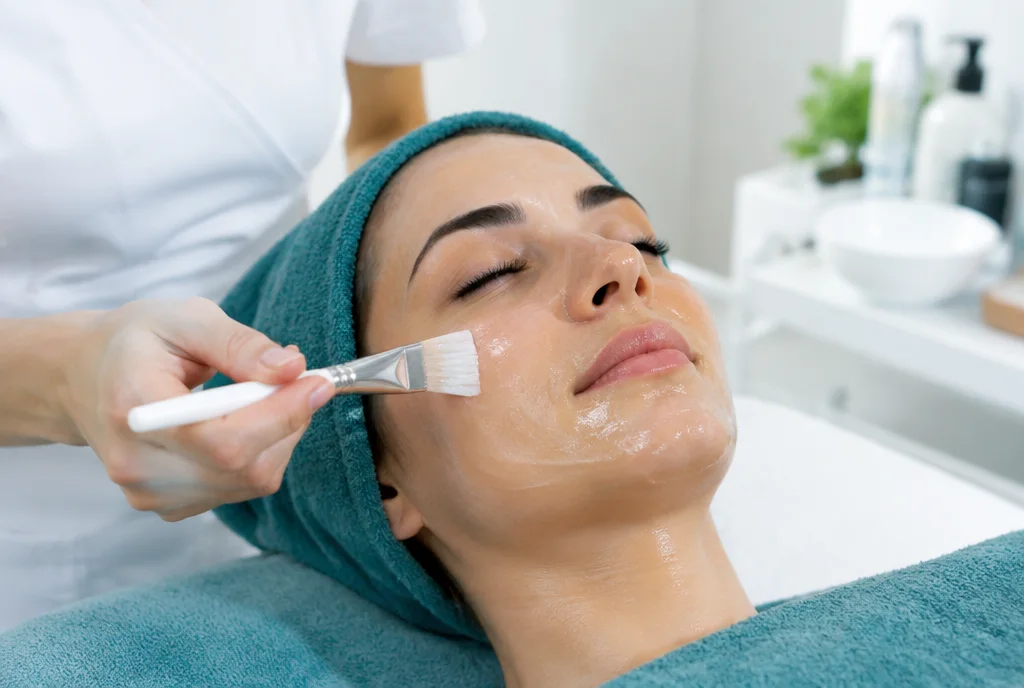
- Serum or ampoule: a multi-fraction formula applied to damp skin, with massage or introduced with a device, if the manufacturer of the preparation allows that method of application.
- Mask: alginate or gel, for 15 to 20 minutes. An occlusive mask supports penetration of the serum applied underneath and limits evaporation.
- Cream and SPF: a cream with emollients and, for a daytime visit, sunscreen at the end.
You postpone the treatment in the case of active herpes, purulent lesions, fresh sunburn and skin damage at the application site. Hyaluronic acid in cosmetics itself rarely causes allergy, but a reaction can be triggered by the preparation’s preservatives or fragrance, so where there is a history of allergies, carry out a test on a small patch of skin behind the ear or on the jawline.
The most common mistakes in a hydrating treatment
- Serum on dry skin in a dry treatment room: without moisture on the surface and without occlusion the humectant has little water to bind, and the client feels tightness after leaving.
- Too much product: excess serum leaves a sticky layer and makes it harder for subsequent preparations to absorb.
- An enzymatic peel on irritated skin: with erythema and stinging you limit the treatment to soothing steps.
- No home recommendations: the client returns after a week with dehydrated skin, because between visits she uses only a toner or a cream without humectants.
A series of 4 to 6 treatments every 7 to 14 days makes it possible to maintain the hydration effect between visits, provided the client uses well-chosen skincare at home. On the treatment card, add a field “hyaluronic acid molecular weight” and enter in it the ranges in kDa and the concentration from the technical data sheet of each ampoule. These data will make it easier to compare preparations when you change supplier or product series.
The home plan, assessing the result and talking to the client
The result of a salon treatment lasts longer when hyaluronic acid in home cosmetics works every day. Agree a simple plan with the client for the duration of the series and record it on the card.
- Morning: gentle cleansing, toner or mist, a hyaluron serum on damp skin, cream, SPF.
- Evening: cleansing, a hyaluron serum, a richer cream in the heating season.
- Once or twice a week: a hydrating mask for 15 to 20 minutes, sealed with cream.
- Surroundings: an air humidifier in the bedroom keeping humidity in the range of 40 to 60%, because in very dry air the humectant has less water to bind.
To assess the result, use a corneometer if you have one in the salon. The device measures hydration of the stratum corneum by the capacitance method and gives the result in arbitrary units, so you compare only measurements from the same device. Take the measurement at the same place on the cheek, after the client has spent 15 to 20 minutes acclimatising to the room, before any product is applied. Also record the temperature and humidity in the treatment room, because both values affect the result.
Take the first measurement before the treatment and the following ones before each subsequent visit in the series, always before cleansing. A result measured just after a mask will show momentary surface hydration, and to assess whether hyaluronic acid in home cosmetics is working between visits you need a reading from before the treatment.
Without equipment, rely on photographs in constant light and on the client’s assessment on a scale of 1 to 10: the feeling of tightness after washing, comfort during the day, how make-up looks. Such notes from successive visits show the trend better than an impression from a single day.
In retail sales, recommend to the client a serum from the same line you use in the treatment and a cream matched to her skin type. Hyaluronic acid in home cosmetics and in salon preparations should have a similar set of fractions; then the client feels continuity of the result between visits, and you can assess more easily how the skin responds to the whole routine.
Set expectations at the very first visit. Hyaluronic acid in cosmetics gives a quick hydrating effect and smooths fine dehydration lines, but by itself it will not change static wrinkles or loss of firmness. A client who reads phrases such as “hyaluronic acid molecular weight” online often asks about low molecular weight products. Explain to her then that what counts in a formula is the set of several fractions, and a single number in kDa says little about a product.
The most common questions about the molecular weight of hyaluronic acid
Which hyaluron is better: low or high molecular weight?
The choice depends on the purpose for which you use hyaluronic acid in cosmetics. High molecular weight protects the surface and gives a quick hydrating effect; low molecular weight partly penetrates and in the Pavicic study was associated with shallower wrinkles. Formulas combining several fractions make use of both mechanisms.
Can hyaluron dry out the skin?
At very low air humidity and with no occlusive layer, clients sometimes report a feeling of tightness. The solution is to apply the serum to damp skin and seal it with cream.
How can I check the molecular weight in a product?
The INCI list does not contain this information. Ask the distributor for the technical data sheet and the ranges in kDa for each form of hyaluron used in the formula.
Can hyaluronic acid be used every day, morning and evening?
Yes, hyaluronic acid in cosmetics is among the ingredients intended for daily use, including twice a day. With very dry skin, more important than frequency is applying the serum to damp skin and sealing it with an emollient cream.
Will hyaluron from a cosmetic replace a filler?
Hyaluronic acid in cosmetics works in the epidermis: it hydrates and smooths fine dehydration lines. Fillers are products administered by injection by a doctor, with a different structure and a different purpose, so suggest a medical consultation to a client who expects wrinkles to be filled.
For the salon in brief: hyaluronic acid in cosmetics works where its molecular weight allows. High fractions build a film on the surface; low and hydrolysed ones partly penetrate the epidermis. Look for multi-fraction formulas at concentrations of 0.1 to 2%, apply them to damp skin and, in dry air, seal them with cream.
Would you like to match hyaluronic acid in cosmetics to your protocols? Book a free consultation and discover our post-treatment cosmetics that complete the treatment.