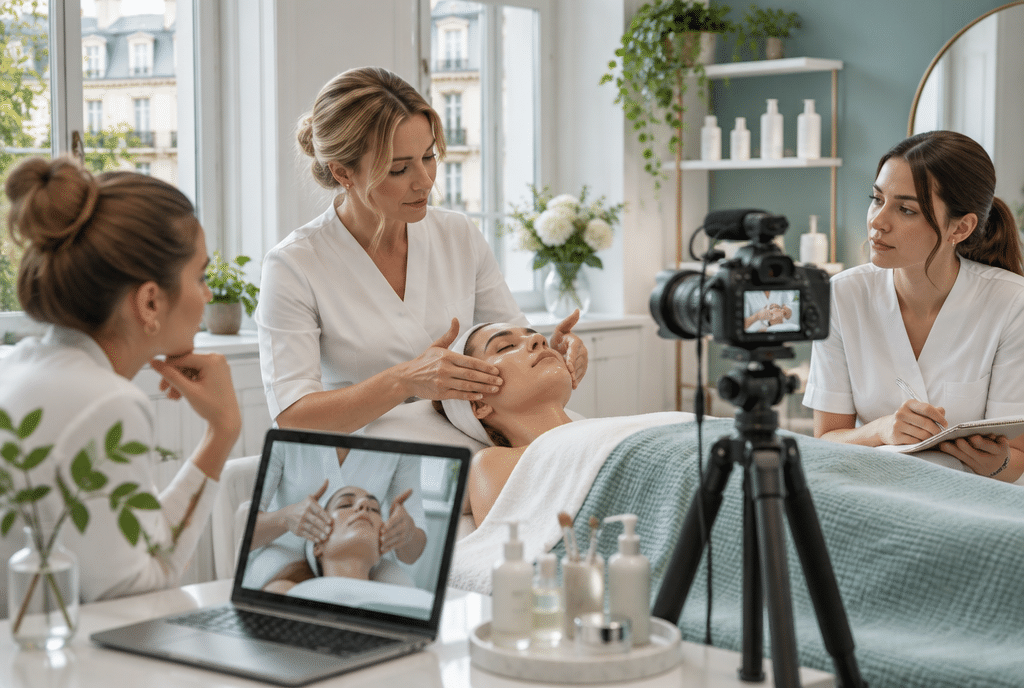
The hydrolipid barrier decides how much water the skin retains, how it reacts to acids and how much of a treatment it can take. In a client with a damaged barrier the skin stings after an ordinary toner, reddens after massage and flakes despite cream. Before you plan a series for her, establish what is damaged and how much time repair needs.
Structure: bricks, mortar and the acid mantle
The hydrolipid barrier works above all in the stratum corneum, which is responsible for the permeability barrier. In 1983 Peter Elias described it with the “bricks and mortar” model: corneocytes are the bricks, and intercellular lipids arranged in lamellae fill the spaces between them. Water has to take a winding route around the cells, through ordered layers of fats, which slows its escape.
- Intercellular lipids: ceramides, cholesterol and free fatty acids. Work by the University of California team showed that all three are needed for proper repair, in an equimolar ratio, that is roughly 1:1:1.
- NMF: natural moisturising factor, a mixture of small, water-soluble compounds formed inside corneocytes from the breakdown of filaggrin. It binds water in the cells themselves.
- Acid mantle: the acidic pH of the skin surface. In a multicentre study of 330 people natural pH was estimated at 4.7 on average, and skin with a pH below 5 had better barrier and hydration parameters.
The role of NMF and lipids in maintaining hydration is well described in the review by Rawlings and Harding, and the pH data come from the paper by Lambers and colleagues. The same paper shows that ordinary tap water with a pH of about 8 raises the skin’s pH for up to six hours.
Skin with a damaged barrier reacts to everything. As long as the mortar between the bricks is full of holes, every further treatment adds to the damage.
TEWL and diagnosis in the salon
The measure of the tightness the hydrolipid barrier provides is TEWL, transepidermal water loss. When intercellular lipids are damaged, TEWL rises and the skin loses water faster than NMF can bind it. Hence the paradox you know from practice: the client moisturises intensively and the skin still feels tight.
You start the diagnosis with the history. Ask about acids and retinoids in home care, the frequency of peels, how she washes her face, topical medication and recent treatments. Then the symptoms: a feeling of tightness after washing, stinging after products that were previously well tolerated, erythema, fine flaking, roughness and a dull, “papery” skin surface.
If you have access to equipment, measuring TEWL and using a corneometer gives you numbers you can compare after a few weeks. The EEMCO group guidelines stress, however, that the result depends on many variables, so the measurement conditions must be standardised: the same room temperature and humidity, the same acclimatisation time, the same place on the face. We write more about organising the consultation in the article on skin diagnostics in the salon.
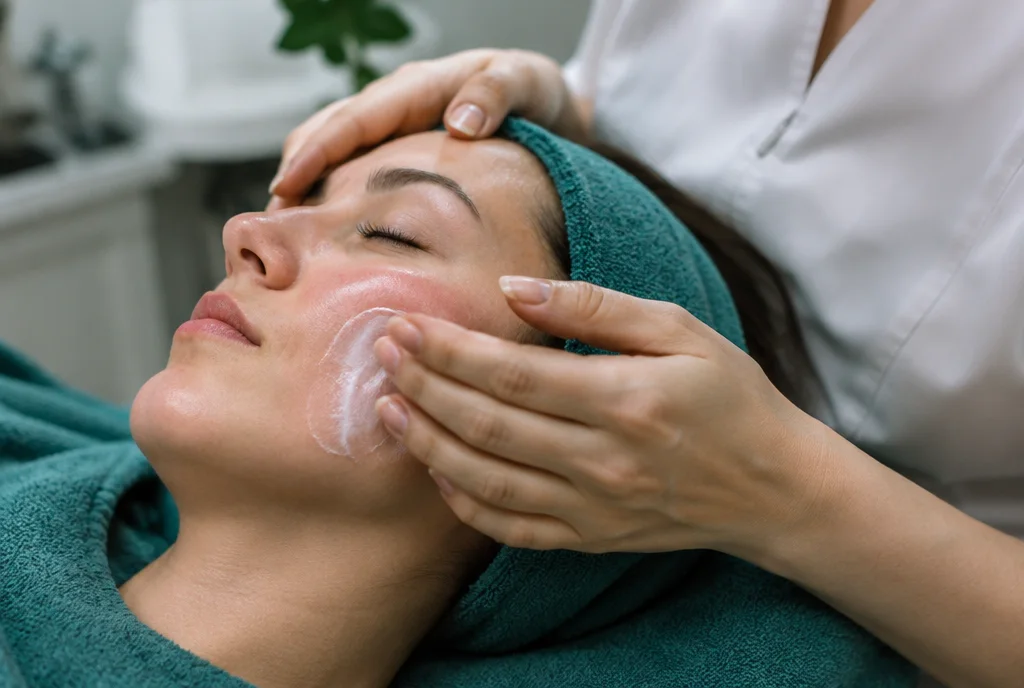
What damages the hydrolipid barrier
- Too much exfoliation: acids in several products at once, retinoids introduced without a gradual build-up, mechanical scrubs every few days.
- Aggressive cleansing: soaps and alkaline detergents, long washing with hot water, double cleansing several times a day.
- Treatments that disrupt the stratum corneum: chemical peels, microdermabrasion and microneedling performed without breaks for regeneration.
- External factors: low air humidity in the heating season, frost, wind, UV radiation.
- Skin condition: atopic dermatitis, psoriasis and contact dermatitis involve an impaired barrier, as described in the review by Proksch and colleagues. If you suspect a skin disease, refer the client to a dermatologist.
When the hydrolipid barrier is damaged, skin prone to redness and rosacea react particularly clearly, with erythema and stinging. We describe the protocol for this group separately in the article on care for redness-prone skin in the salon.
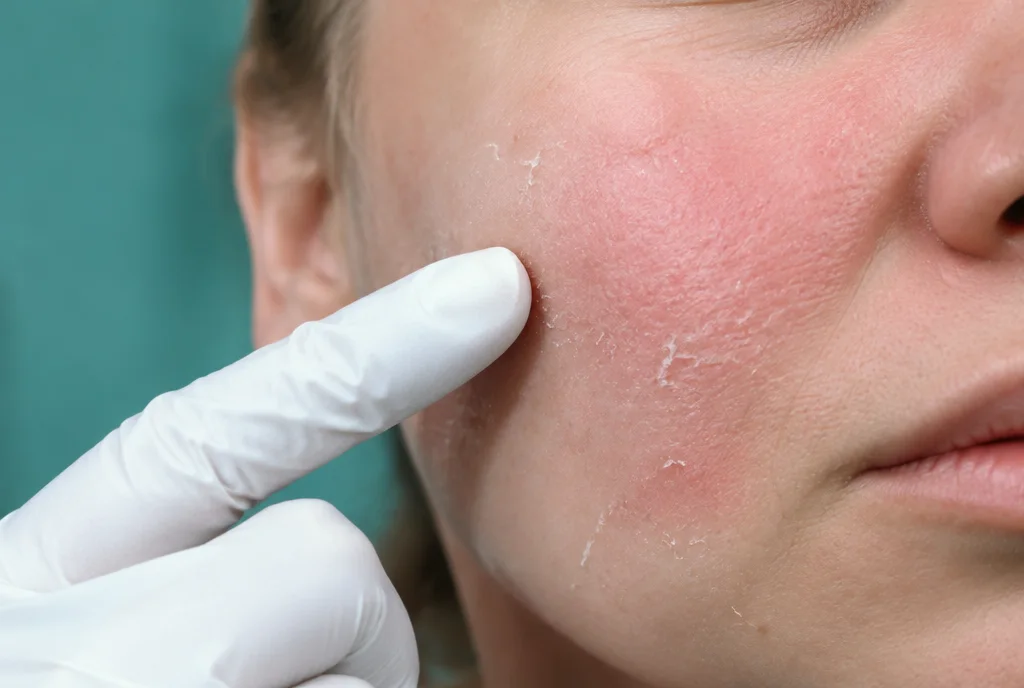
Rebuilding the hydrolipid barrier step by step
- A break from exfoliation: stop acids, retinoids and mechanical scrubs at home and in the salon for the whole time the hydrolipid barrier is being rebuilt.
- Gentle cleansing: a product with an acidic or neutral pH, lukewarm water, washing once or twice a day, drying by pressing a towel against the skin.
- Humectants: glycerine, hyaluronic acid, urea at a low concentration. They draw water into the stratum corneum.
- Emollients and occlusion: emollients smooth the surface and fill the gaps between scales, occlusive substances limit evaporation. At night, with very dry skin, a heavier formula.
- Physiological lipids: a cream with ceramides, cholesterol and free fatty acids. In the study by Man and colleagues, applying only one or two of these lipids delayed repair, an equimolar mixture allowed normal repair, and increasing the share of one component threefold accelerated it further. Most of the data come from a mouse model; preliminary results on human skin were similar.
- Niacinamide: in the paper by Tanno and colleagues it increased ceramide synthesis in keratinocyte culture 4.1 to 5.5 times, and applied topically it raised the level of ceramides and free fatty acids in the stratum corneum and lowered TEWL in dry skin.
How long does rebuilding the hydrolipid barrier take? It depends on the degree of damage and on how consistently the client follows the recommendations. In practice, plan a check after two weeks and an assessment after four, comparing symptoms and, if you have the equipment, the TEWL result too. Subsiding stinging and tolerance of products that previously stung are a sign that repair is progressing.
The hydrolipid barrier and the treatment plan
For the rebuilding period, set aside chemical peels, microdermabrasion, microneedling, laser and intense light treatments, and facial waxing. What stays in the salon are hydrating and soothing treatments with no exfoliating component, with a lipid or occlusive mask at the end. Return to invasive treatments only when the symptoms have gone and the skin tolerates basic care without stinging. That is the sign that the hydrolipid barrier has regained its tightness.
The same scheme will serve you after every treatment that disrupts the stratum corneum. We have gathered the recommendations for the first days after a visit in the article on care after aesthetic treatments. A client who understands why you are postponing a peel by a month finds it easier to trust you with the next series.
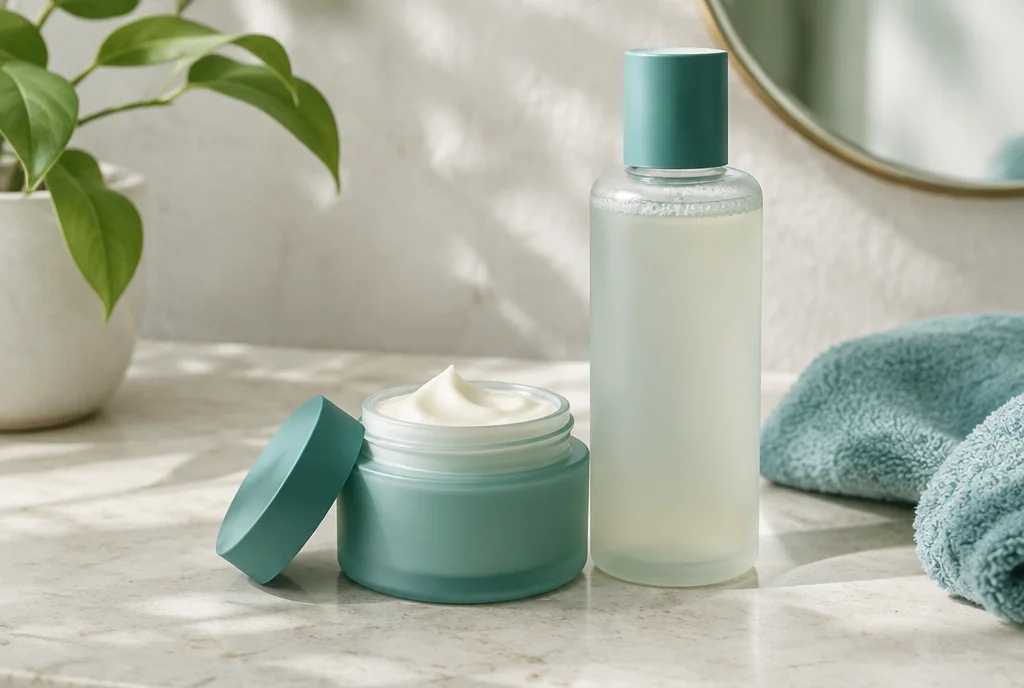
The hydrolipid barrier in the INCI list: how to assess a cream
Clients with irritated skin bring a bag of cosmetics to the salon and ask which to keep. Start the assessment with the INCI list, because the hydrolipid barrier needs specific groups of ingredients that can be found on it. Remember the rule from Regulation 1223/2009: the manufacturer may list ingredients at a concentration below 1% in any order, so a ceramide at the end of the list may have a share comparable to the extract before it.
- Ceramides: Ceramide NP, Ceramide AP, Ceramide EOP, Ceramide NS, often accompanied by Phytosphingosine, which is a ceramide precursor.
- Cholesterol and fatty acids: Cholesterol, Linoleic Acid, Palmitic Acid, Stearic Acid. In the list you are looking for all three groups of physiological lipids described in the section on the structure of the stratum corneum.
- Emollients: Squalane, Caprylic/Capric Triglyceride, Butyrospermum Parkii Butter, plant oils rich in linoleic acid.
- Occlusive substances: Petrolatum, Dimethicone, Cera Alba, lanolin. They limit water evaporation from the surface.
- Humectants: Glycerin, Urea, Sodium Hyaluronate, Panthenol, Sodium PCA.
Equally important is what a cream for skin with a damaged barrier should not contain. Fragrance (Parfum, Aroma) and essential oils increase the risk of irritation, as does denatured alcohol (Alcohol Denat.) high in the list. In cleansing gels you check for strong anionic detergents, for example Sodium Lauryl Sulfate, and the pH: a product with a pH close to the skin’s natural pH, about 5, disturbs the acid mantle less than an alkaline soap.
The form of the product is also assessed. During rebuilding, the hydrolipid barrier responds well to creams with a lamellar emulsion structure and to anhydrous balms at night, and less well to light gels with a large amount of alcohol. Packaging with a pump or a tube limits the product’s contact with the fingers, which with reactive skin reduces the risk of contaminating the product.
Read the claims on the front of the packaging more cautiously than the ingredients. The term “hypoallergenic” means that the manufacturer has limited ingredients with a known allergenic potential, but it does not rule out the risk of allergy. Claims such as “for atopic skin” or “dermatologically tested” tell you about the target group and the manufacturer’s tests, and only the INCI list tells you about the content of physiological lipids. When the hydrolipid barrier is badly damaged, choose formulas with a short ingredient list, because every additional ingredient is another variable when assessing a reaction.
Rebuilding the hydrolipid barrier at home: a four-week plan
Rebuilding the hydrolipid barrier goes faster when the client gets a plan set out week by week, with a small number of products. The fewer cosmetics, the easier it is to identify the one causing a reaction. The scheme below assumes that the client has already stopped exfoliation, in line with the rules described above.
| Stage | Skincare | Goal |
|---|---|---|
| Weeks 1 and 2 | a gentle cleanser, a cream with physiological lipids morning and evening, SPF sunscreen in the morning | stinging and tightness subside |
| Weeks 3 and 4 | additionally a serum with humectants or low-concentration niacinamide | smoothing and flaking subsides |
| From week 5 | after assessment in the salon, active ingredients return, one at a time about every two weeks | stable tolerance of the target routine |
- Washing: one cleanse with a gentle product in the evening; in the morning, with very reactive skin, just lukewarm water.
- Applying cream: to slightly damp skin, within a few minutes of drying with a towel.
- Testing a new product: for a few days on a small area of skin by the jaw before it goes on the whole face.
- Make-up: lighter formulas and thorough but gentle removal, without rubbing with a cotton pad.
- Shower: short, in lukewarm water, with the face washed last to limit its contact with hot water.
Ask the client to keep a short diary: the date, the products used, how the skin felt after washing and after applying cream on a scale of 0 to 3. At the check after two weeks you set these notes against the photographs and the result of the skin examination. Such records show whether rebuilding the hydrolipid barrier is going in the right direction, and which product or habit causes stinging, before the client starts changing the plan herself.
When active ingredients return, you start with the one the client needs most, for example a retinoid for photoageing or azelaic acid for hyperpigmentation, at the lowest frequency. You add each further product only when the skin has stayed calm for two weeks. Rebuilding the hydrolipid barrier, done thoroughly, later allows more intensive care and a series of treatments to be run safely.
A soothing visit during the plan
Rebuilding the hydrolipid barrier at home combines well with one soothing visit every 7 to 14 days. Such a treatment lasts 40 to 50 minutes and consists of a few simple steps, and you set the contact times of the products according to the manufacturer’s protocol.
- Cleansing: a milk or emulsion rinsed off with lukewarm water, without brushes or sponges.
- Toning: a toner without alcohol or fragrance, applied with the hands.
- Serum: humectants with panthenol or allantoin, worked in with gentle pressure massage.
- Mask: lipid or alginate at room temperature, 15 to 20 minutes.
- Finish: a ceramide cream and, in the morning or during the day, SPF sunscreen as well.
The hydrolipid barrier, the season and the phototype
In the heating season, air humidity in homes and offices often falls below 30%, and the hydrolipid barrier loses water faster. From October to March plan richer night creams, more emollients and occlusion, and recommend to clients who work by a radiator or air conditioning a humidifier that keeps humidity in the range of 40 to 60%. Frost and wind add to the damage, so before going outdoors in winter a protective cream with a thicker texture works well.
In summer the skin sweats more often, and clients reach for strong cleansing gels and alcohol-based toners, which dry out the epidermis. UV radiation weakens the barrier, so daily SPF sunscreen belongs in the rebuilding plan all year round. Chlorinated pool water and sea water with wind and sun increase dryness, so after bathing the client rinses her face and applies cream.
You will also meet very dry air in an aircraft cabin and in air-conditioned offices all year round. Offer a client who flies often or spends eight hours a day in an office a lipid cream in travel-size packaging to reapply during the day. In these conditions the hydrolipid barrier loses water faster than at home, so an extra layer of emollient at lunchtime limits the feeling of tightness towards evening.
- Phototypes I and II: fair skin reacts faster with erythema and stinging, so the criterion for returning to treatments is the absence of erythema at rest.
- Phototypes IV, V and VI: erythema can be hard to see, and every irritation increases the risk of post-inflammatory hyperpigmentation. Rely on what the client feels, on flaking and on the roughness of the skin.
- Mature skin: with age the stratum corneum regenerates more slowly and the sebaceous glands produce less sebum. Extend the stages of the plan by a week or two.
Mistakes in the salon and the conversation with the client
The hydrolipid barrier is rarely damaged for a single reason. More often small decisions add up, which in the salon can be caught when taking the history and setting out the plan.
- Returning to treatments too quickly: a peel planned after a week because the client feels better, even though flaking is still visible.
- Confusing dehydration with oiliness: oily skin with high TEWL gets yet more mattifying and cleansing products, which deepen the problem.
- Testing new products on irritated skin: a reaction to a new product is then hard to assess and is often wrongly attributed to an ingredient.
- Hot compresses and long steaming: high temperature intensifies erythema and water evaporation.
- Exfoliating extras in a soothing treatment: a mask or toner with PHA acids or enzymes added “for radiance” during rebuilding lengthens repair by further weeks.
- Cleansing brushes and mitts: mechanical friction removes part of the stratum corneum every day, so for the duration of the plan the client washes her face with her hands.
- Too many products in the home plan: five serums at once make it harder to establish the cause of stinging.
- No SPF sunscreen in the recommendations: the client gives up protection because the sunscreen stung, instead of being given a gentler formula.
Base the conversation with the client on the symptoms she reports herself: stinging, tightness, flaking. Explain in simple language that a damaged stratum corneum lets water out and irritants in, and that rebuilding the hydrolipid barrier requires several weeks of consistency. Show the photograph from the first visit at every check. A client who sees the change more readily accepts a postponed treatment and stays with the recommended care.
How to assess progress without equipment
TEWL measurement and corneometry give numbers, but without them you can assess progress from a fixed set of symptoms. At every check, rate on a scale of 0 to 3 erythema, flaking, roughness to the touch and stinging after applying cream. Take photographs in the same light, from the same distance, always before cleansing in the salon. A simple tolerance test is the skin’s reaction to a gentle toner that stung at the start: no stinging on application indicates that the stratum corneum is regaining its tightness.
Record on the card the list of products stopped, the start date of the plan and the dates of the checks. If after four weeks the symptoms persist or worsen, and the history includes itching, oozing or lesions beyond the face, refer the client to a dermatologist. A hydrolipid barrier that does not improve despite correct care may point to a skin disease requiring medical diagnosis.
The most common questions about the hydrolipid barrier
Will a moisturiser alone rebuild the barrier?
A cream with humectants alone will improve comfort, but with high TEWL the water will evaporate quickly. Look for a formula combining humectants, emollients and physiological lipids, because the hydrolipid barrier needs all three groups of ingredients.
How long does rebuilding the hydrolipid barrier take?
Rebuilding the hydrolipid barrier depends on the cause and the degree of damage. Clients usually report the first improvement in comfort sooner than flaking subsides, so assess the result after a few weeks, not a few days.
Can niacinamide be used with a damaged barrier?
Studies indicate that niacinamide supports the synthesis of stratum corneum lipids. With very reactive skin, introduce it gradually and at a lower concentration, watching tolerance.
Can hydrating treatments be done with a damaged barrier?
Yes, if the treatment leaves out exfoliation, hot compresses and high-pressure massage. During rebuilding the hydrolipid barrier tolerates lipid and soothing masks well, and a series of such visits lets you assess progress regularly.
What pH should a facial cleanser have?
With skin that has a damaged barrier, choose products with a slightly acidic pH, close to the natural pH of the skin surface, that is about 5. Rebuilding the hydrolipid barrier progresses faster when washing stops raising the pH and removing lipids from the stratum corneum.
For the salon in brief: the hydrolipid barrier means intercellular lipids, NMF and the acidic pH of the skin surface. Diagnose by history, symptoms and, if you can, TEWL measurement. Rebuilding the hydrolipid barrier requires a break from exfoliation, gentle washing, humectants, emollients and physiological lipids. Treatments that disrupt the stratum corneum return only after the symptoms have gone.
Would you like to set out a barrier-rebuilding protocol for your clients? Book a free consultation and read how to choose post-treatment cosmetics that complete the treatment.