PDRN in cosmetology has travelled from a medicine used for hard-to-heal wounds to an ingredient in ampoules, serums and post-treatment masks. Behind this career stand well-described pharmacology and several sound clinical studies, with one caveat: most of them concern injections and medical indications. Below you will find what is known about PDRN, how it differs from polynucleotides and at which points of a visit it is justified.
What PDRN is and where it comes from
Polydeoxyribonucleotide, PDRN for short, is a mixture of DNA fragments obtained from the sperm of salmonid fish, mainly salmon and trout. The raw material is purified, leaving only the nucleotide chains. According to a review published in the International Journal of Biological Macromolecules in 2024, PDRN registered as a medicine contains fragments with a molecular weight of 50 to 1500 kDa, and the purity of the active substance exceeds 95%. The authors also describe the search for new sources of raw material, and varieties obtained from plants, for example, are appearing on the cosmetics market.
The mechanism on which PDRN in cosmetology relies has two pathways. The first is stimulation of the adenosine A2A receptor, which in experimental models quietens pro-inflammatory cytokines such as TNF-α and IL-6 and increases the secretion of vascular endothelial growth factor VEGF, and with it the formation of new vessels.
The second is the so-called salvage pathway: DNA fragments are broken down into nucleotides and nucleosides, which the cell uses as ready material for synthesising its own DNA. The 2021 review by Galeano and co-authors, covering 25 years of publications, links both mechanisms with faster migration of fibroblasts and keratinocytes and with better healing in models of impaired regeneration.
The strongest data on PDRN come from wound treatment. PDRN in cosmetology draws on that knowledge, but the effect of a cosmetic applied to the skin has to be described more cautiously.
PDRN in cosmetology: what the studies say
The most frequently cited clinical study was published in 2014 by Squadrito’s team in the Journal of Clinical Endocrinology and Metabolism. In a randomised, double-blind trial, 216 people with diabetes and chronic foot ulcers received PDRN or placebo for 8 weeks, intramuscularly and around the wound. Complete healing was achieved in 37.3% of people in the PDRN group against 18.9% in the placebo group, and the median time to wound closure was 30 days against 49.
Closer to aesthetics is a systematic review published in Cureus in 2026. The authors found seven randomised studies, with 183 participants in total, on skin rejuvenation, scar prevention and wound healing. The most consistent results concerned healing, where PDRN accelerated re-epithelialisation. The limitations that apply to the whole literature on PDRN in cosmetology were named directly: small groups, different protocols and different methods of measurement.
If you are introducing PDRN in your salon, one distinction follows from these data. Many studies concern injections and clinical settings, while topically applied cosmetics have clearly more modest data. DNA fragments are large molecules, and for these an intact stratum corneum is a serious barrier. Results from ulcers or post-operative scars therefore do not transfer automatically to a serum applied to healthy skin.
PDRN versus polynucleotides (PN)
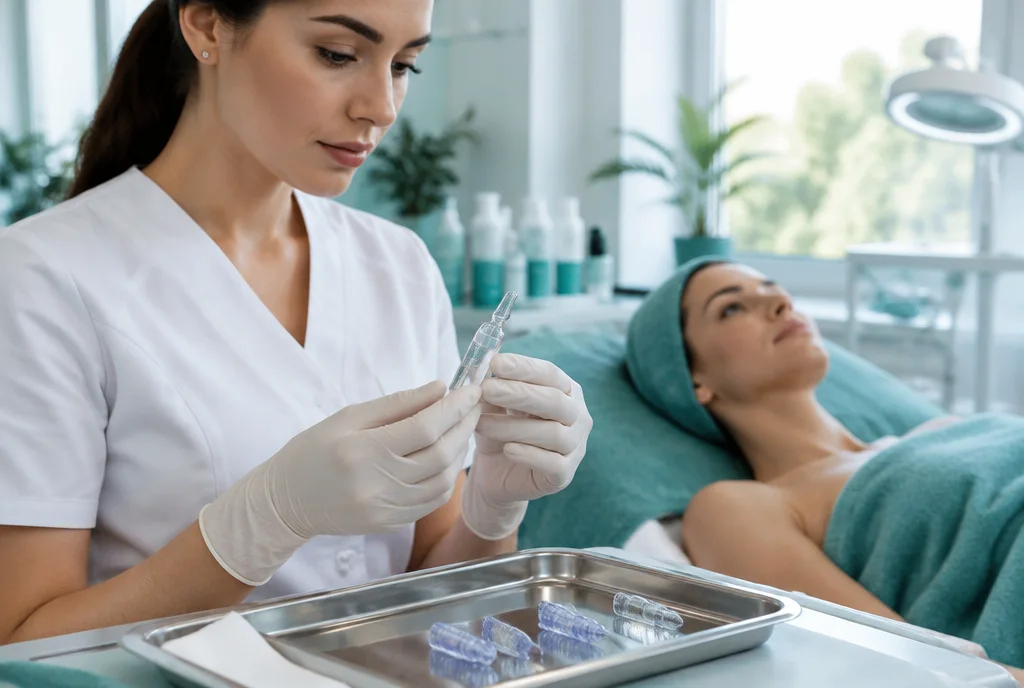
When the conversation turns to PDRN in cosmetology, clients and sales representatives often use the two names interchangeably. Both ingredients come from DNA, usually from the same fish raw material, but they differ in chain length and, with it, in function. A comparative review in Pharmaceutics from 2025 describes the differences in structure and mechanism, and market practice adds two more:
- Chain length: polynucleotides consist of longer DNA fragments and have a higher molecular weight, PDRN of shorter ones.
- Main mechanism: PN is associated above all with remodelling of the extracellular matrix, PDRN with activation of adenosine receptors and supplying nucleotides through the salvage pathway and de novo synthesis.
- Context of aesthetic studies: PN appears mainly in biostimulation preparations, for example for the under-eye area, PDRN more often in the context of regeneration and healing.
- The cosmetic’s label: the word “polynucleotides” on the packaging can mean either fraction. Ask the manufacturer about the source, the molecular weight range and the INCI name.
We show the broader picture of regenerative ingredients, from copper peptides to exosomes, in the article on exosomes in cosmetology.
PDRN in the salon: after treatments, with microneedling and at home
PDRN in the salon is best justified where the skin undergoes controlled damage and needs efficient rebuilding. A narrative review from 2026 devoted to recovery after aesthetic treatments lists laser resurfacing, chemical peels, microneedling and radiofrequency as procedures that PDRN fits by mechanism. The same authors note the lack of large randomised studies in aesthetic groups and the lack of long follow-up.
- After treatments that disrupt the barrier: after a peel, cleansing or microdermabrasion, a PDRN preparation completes the treatment in the calming phase, when penetration of ingredients is greater than through intact epidermis.
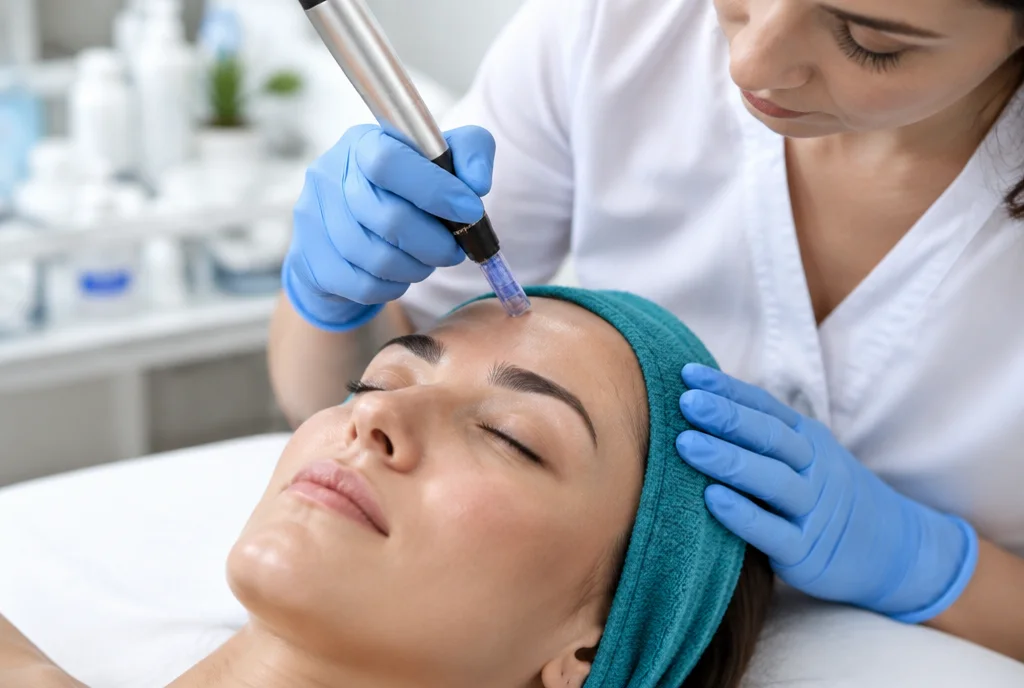
- With device microneedling: the needles open channels in the epidermis, so the quality of the preparation matters: sterility, single-use packaging and intended use for this technique according to the manufacturer. Set the working parameters in line with the instructions for the microneedling mesotherapy device.
- Home care: a serum or cream with PDRN maintains regeneration between visits. Set expectations lowest here, because the data for topical forms on intact skin are the most modest.
For work with PDRN in the salon, Este Group offers Meso Therapy ampoules by ZQ-II Medical Skin Care, produced under the GMP regime and intended for professional use.
We describe the rules for managing skin in the days after a visit in the article on care after aesthetic treatments.
How to describe PDRN in your menu and when talking to a client
The phrase “salmon DNA” attracts attention but also raises questions. Explain that in the described mechanism the fragments are broken down into nucleotides, which cells use as building material. Before the treatment, ask about allergies, including to fish, and check the contraindications given by the manufacturer of the preparation.
When describing PDRN in the salon, keep to language that will stand up to the literature: support for regeneration after a treatment, skin comfort, a shorter period of redness as the goal of the protocol. Claims of treating scars or rejuvenating by a specific number of years rest on studies of other forms and other indications, so they have no basis in a salon’s materials.
A PDRN treatment protocol in the salon, step by step
You build a PDRN protocol in the salon around one goal: the preparation should reach the skin when its permeability is highest and the risk of infection lowest. The order of stages below corresponds to a treatment with device microneedling, which gives the ingredient the best conditions. In the needle-free version you skip stage four and apply the ampoule after the peel, under the mask.
- Qualification: consultation, client record card, baseline photograph and assessment of the barrier. If the skin is red after home acids, you move the date by a few days.
- Make-up removal and cleansing: a gentle cleanser, then an alcohol-free toner. Before the next stage the skin should be clean and dry.
- Preparing the epidermis: a gentle enzymatic peel or a low-concentration acid peel, if the manufacturer of the preparation allows this combination. After rinsing or neutralising, you wait until the skin stops stinging.
- Disinfection and microneedling: antiseptic on the skin, a single-use sterile cartridge, gloves. You set the depth separately for the forehead, cheeks and jawline, in line with the instructions for the microneedling mesotherapy device, and work on a thin layer of the preparation.
- Applying PDRN: you open the ampoule just before use and use it up on one client. You massage in the rest of the preparation with your fingertips once needling is finished.
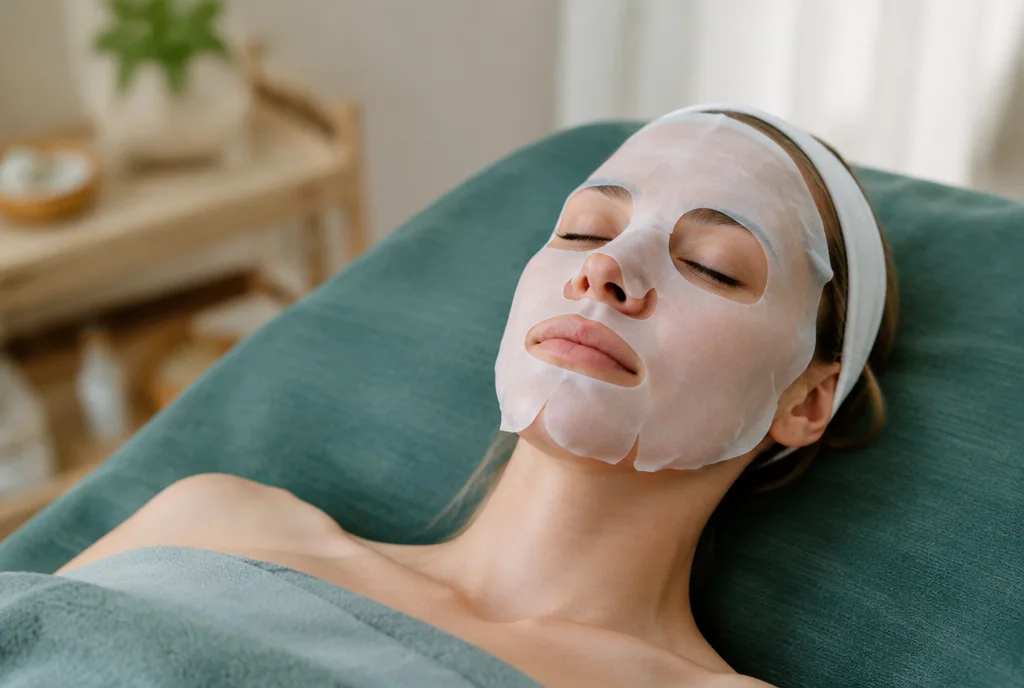
- Calming: a soothing mask for 15 to 20 minutes, then a regenerating cream and a mineral sunscreen.
- Recommendations: a message or printout with a plan for the coming days, described later in this article.
Allow 60 to 75 minutes in the schedule for a PDRN visit in the salon. Haste most often shortens the calming stage, and that is the stage that determines the client’s comfort in the first hours after leaving the salon.
How to assess the skin’s reaction during the treatment
During needling you watch for erythema and, at deeper settings, pinpoint bleeding. Even, pink erythema means you are working within the intended range. Diffuse bleeding, blisters or strong stinging in one area is a signal to reduce the depth or end the stage. Record every such observation on the card, because at the next visit you will set the parameters from that point.
PDRN combined with other treatments
You most often combine PDRN in the salon with treatments that increase penetration through the stratum corneum. The order stays the same: first the stage that disrupts the barrier, then the regenerating preparation, and calming at the end. With several techniques in one visit, adopt the rule of one high-intensity stimulus and keep the rest of the protocol gentle.
- Chemical peel: with a superficial peel you apply the ampoule after neutralising or rinsing off the acid. After a higher-concentration peel with visible flaking, you move PDRN to home care and postpone microneedling until healing is complete.
- Hydrogen cleansing and microdermabrasion: these prepare the skin well for an ampoule applied under a mask. With sensitive skin you skip needling that day.
- LED light: you can include red-light exposure in the calming stage, if the device manufacturer allows work on skin immediately after microneedling.
- Ingredients in one formula: PDRN often appears together with hyaluronic acid, peptides and niacinamide, which skin usually tolerates well after a treatment. Acids, retinoids and low-pH L-ascorbic acid serums are used separately, outside the healing period.
You first test every new combination on one client you know well and record the reaction on the card after 24 and 72 hours. Then you add it to the treatment menu as a fixed PDRN protocol in the salon.
Contraindications and situations in which you will postpone the visit
The list of contraindications for PDRN in the salon has two parts: one that follows from the preparation itself and one that follows from the technique. The first is given by the ampoule manufacturer, the second by the device manufacturer, and with microneedling the second is usually longer. You check both with every client, including regular ones, because their health and medication change between visits.
- Allergy to fish or to ingredients of the preparation: PDRN in cosmetology usually comes from salmon or trout sperm, so with a fish allergy you choose a different regenerative ingredient.
- Active infection in the treatment area: herpes, impetigo, fungal lesions. With recurrent herpes, the client consults a doctor about prophylaxis before microneedling.
- Active inflammation: acne with pustules, psoriasis or eczema in the working area. Needling can spread infection and aggravate the lesions.
- Pregnancy and breastfeeding: manufacturers of preparations and devices most often exclude this period because of the lack of studies.
- Medication and systemic diseases: anticoagulants, oral isotretinoin, autoimmune diseases, diabetes with impaired healing, a tendency to keloids. In these situations you decide on the treatment after the consent of the treating doctor.
- A fresh tan or sunburn: wait until the erythema and flaking have completely subsided.
A separate group is situations that move the date by a few days. These include a home retinoid or acids used in the last days before the visit, facial waxing in the last week and a recent hyaluronic acid filler or botulinum toxin in the treatment area. Agree the interval after a medical procedure with the doctor who performed it and enter it on the client’s card. With PDRN in the salon, put the whole checklist in the consent form, so that the client confirms it with a signature before every series.
PDRN in cosmetology: how to read the ingredients and assess a preparation
The market for cosmetics labelled PDRN is growing faster than the scientific literature, so assessing a product starts with the label and the manufacturer’s documents. PDRN in cosmetology comes in three forms: sterile ampoules for work with microneedling, serums and creams for skincare, and sheet masks. With each of them you ask the distributor different questions.
- INCI name: DNA fragments from fish most often appear in ingredient lists as Sodium DNA. The word “PDRN” alone in a commercial description, with no equivalent in the INCI list, calls for asking the manufacturer what exactly the product contains.
- Source of raw material: salmon, trout or plants. The data on which PDRN in cosmetology rests mainly concern fish raw material. Plant varieties have their own, shorter research history.
- Position in the ingredient list: the INCI list gives ingredients in descending order of concentration, and below the 1% threshold in any order. DNA fragments at the end of the list, after preservatives and fragrance, mean a small amount.
- Intended use: for microneedling you use only a sterile preparation in single-use packaging, described by the manufacturer as intended for this technique.
- Documentation: notification of the product in the EU CPNP portal, confirmation of production in line with GMP under ISO 22716, expiry date and storage conditions.
When comparing offers, check whether the concentration declared by the manufacturer refers to the finished product or to the raw material. Two serums labelled “PDRN 2%” can contain different amounts of active substance if in one of them the 2% refers to a raw-material solution. Also ask about pH and the preservative system, because on skin just after a treatment both parameters affect tolerance as strongly as PDRN itself.
A series of treatments, home care and assessing the result
PDRN in the salon works best in a series, because skin remodelling after microneedling lasts longer than the visible erythema. Ampoule manufacturers usually propose 3 to 5 treatments at intervals of 2 to 4 weeks. You set the final rhythm after the first visit, on the basis of the number of days the redness took to subside and the reaction recorded on the card.
A home plan between visits
- First 24 hours: no make-up, washing with lukewarm water or the product you indicate, a regenerating cream. The client postpones exercise and hot baths until the next day.
- Days 2 and 3: a gentle cleanser, a serum or cream with PDRN morning and evening, SPF 50 every time she goes out. The client avoids the swimming pool, sauna and sunbeds.
- Days 4 to 7: a return to light make-up. Retinoids, acids and grainy scrubs come back once flaking has completely subsided.
- Until the end of the series: daily photoprotection and a fixed set of products, with no new active ingredients introduced along the way.
We write more about managing skin after a visit in the article on care after aesthetic treatments. Give the client the home plan in writing, because on the day of the treatment she will remember half of the verbal recommendations at most.
How to measure the result
You measure the result of working with PDRN in the salon with the same tools at every visit. Take photographs in the same place, in the same light and from the same distance, front-on and from both profiles, without make-up. If you have a corneometer and a TEWL meter, measure after at least 15 minutes of the skin adapting to room temperature, always at the same points on the cheek and forehead. Also record on the card the number of days until the erythema subsides after each treatment.
Show the client comparison photographs after the series is finished, when the difference covers several weeks of work. You then describe PDRN in cosmetology in the language of measurements: hydration of the stratum corneum, transepidermal water loss, healing time after a treatment and evenness of skin tone in the photographs.
The most common questions about PDRN in cosmetology
Are PDRN and polynucleotides the same ingredient?
Both come from DNA, but PDRN has shorter fragments and acts mainly through the adenosine A2A receptor, while polynucleotides have longer ones and are associated with remodelling of the extracellular matrix.
Does a cosmetic with PDRN work like a preparation given by injection?
There are no data to confirm this. Most clinical studies concern injections, and large DNA molecules penetrate intact stratum corneum poorly. That is why PDRN in the salon is best combined with treatments that temporarily open the epidermis.
When in the protocol should the PDRN ampoule be applied?
Usually at the stage that closes the treatment, after a peel or during microneedling, in line with the instructions of the manufacturer of the preparation and the device.
How many PDRN treatments should be planned in a series?
Most often 3 to 5, at intervals of 2 to 4 weeks, in line with the ampoule manufacturer’s instructions. After the series, PDRN in the salon returns in maintenance visits, whose frequency you set on the basis of the measurements and photographs recorded on the client’s card.
Can the client use retinoids and acids during the series?
She stops them a few days before the treatment and until flaking has completely subsided afterwards. The rest of the time they return to her skincare in the rhythm agreed with you, always with daily SPF 50. The same rhythm applies when you use PDRN in cosmetology only in home care after a peel.
For the salon in brief: PDRN in cosmetology has a solid basis in wound-healing research, mainly with injections. It makes the most sense after treatments that disrupt the barrier and with device microneedling. In home care, treat it as support, and in your menu describe it as a regenerative ingredient, without medical promises.
Would you like to include PDRN in your post-treatment protocols? Book a free consultation and see the mesotherapy ampoules with PDRN.