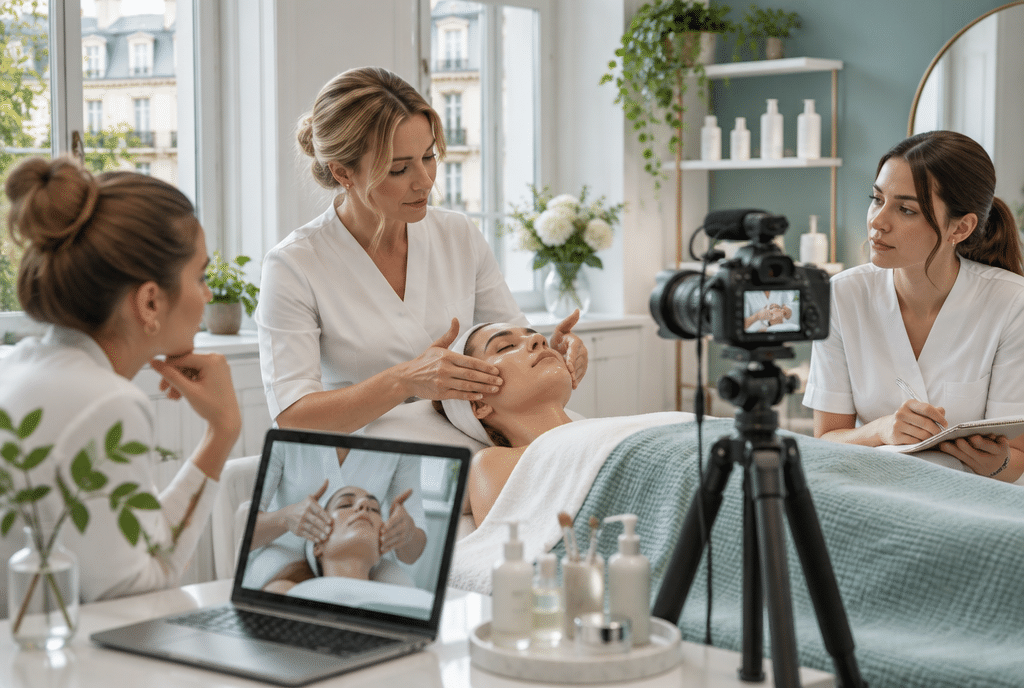
Professional dermocosmetics for salons are usually bought after a sales representative’s presentation and assessed only after several months of work at the treatment chair. That order can be reversed. It is enough to know which documents and information the manufacturer is obliged to hold, how to read the ingredients on the label and what to ask before the first series reaches the shelf.
A dermocosmetic under EU law
The word “dermocosmetic” is used in marketing, but European Union law does not define it. Every such product is a cosmetic within the meaning of Regulation (EC) No 1223/2009 on cosmetic products, that is a substance or mixture intended for contact with the external parts of the body, whose purpose is mainly cleaning, perfuming, changing appearance, protecting or keeping in good condition. It is subject to the same requirements as a high-street cream, and professional dermocosmetics for salons differ from it in formulation, packaging and sales channel, but their legal status remains the same.
Specific questions follow from this for a distributor offering professional dermocosmetics for salons. Every cosmetic placed on the EU market must have a designated responsible person established in the Union, a safety assessment and a product information file (PIF). Article 11 requires the file to contain proof of the effect claimed, where justified by the nature or effect of the product. Claims on the packaging are assessed against the common criteria of Commission Regulation (EU) No 655/2013: legal compliance, truthfulness, evidential support, honesty, fairness and informed decision-making. An example from our distribution: for the Spanish brand FR~HAUT the responsible person in the EU is Este Group.
The prefix “dermo” on the label changes nothing legally. Quality is shown by the ingredients, the documentation and the way the product is made.
How to read INCI and concentrations
The list of ingredients in INCI nomenclature is given in descending order of weight. The regulation does, however, allow ingredients at a concentration below 1% to be listed in any order after those above 1%. For you this means two things. The position of an active ingredient in the first part of the list gives some indication, and an ingredient placed after the preservatives and fragrance is most probably present in a small amount. The exact concentration cannot be read from the label alone.
Professional dermocosmetics for salons often work at higher concentrations than the same brand’s retail products, so compare the ingredients of the salon and home versions separately. The same active ingredient in third and in twelfth place on the list means two different conversations with the client about results and tolerance.
- Ask about concentrations directly: a manufacturer confident in its formulation will give the percentage of acid, retinoid or vitamin C, at least in training materials for salons.
- Check the pH of acid products: with peels, concentration alone says less than concentration set against pH.
- Compare the form of the ingredient: vitamin C, retinoids and peptides come in many derivatives with different stability and tolerance.
- Pay attention to fragrance and allergens: in a post-treatment line every unnecessary irritant works against you.
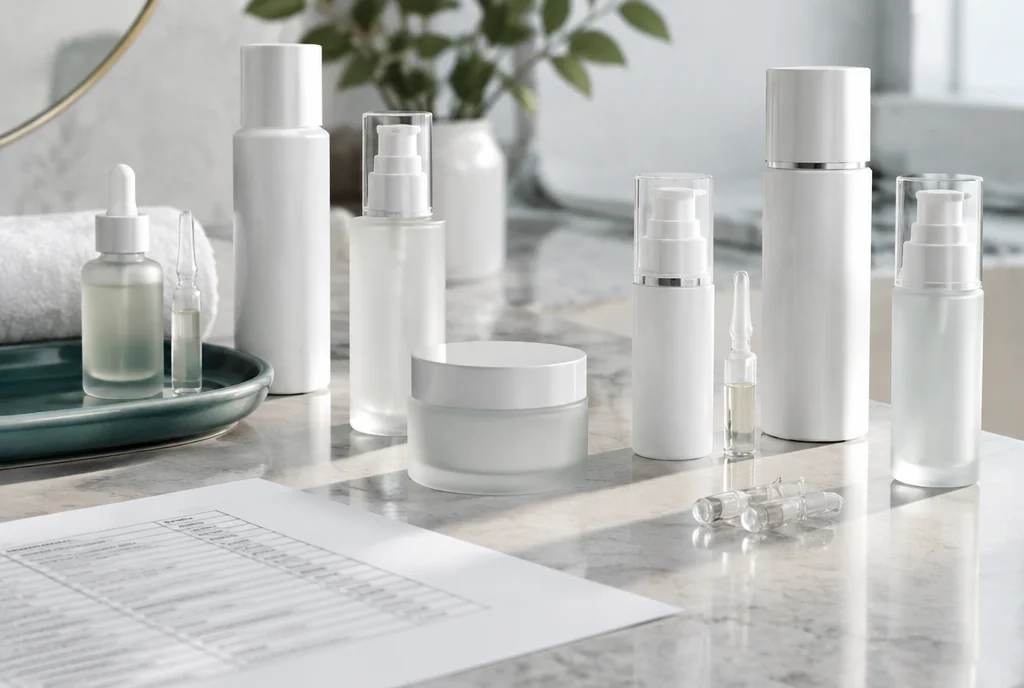
Application studies versus claims
In the materials a dermocosmetic brand for salons uses to promote its lines, the claims “clinically tested” or “dermatologically tested” usually describe application studies of the finished product on a group of volunteers. Their value depends on details that are easy to check by asking for the report or a summary of it. The number of participants, the duration of use, the presence of a control group, the measurement method (equipment or self-assessment) and the centre that carried out the study say more than the percentage of satisfied people alone.
Studies of the ingredients themselves are a separate category. A publication on the effectiveness of a peptide at a given concentration concerns that peptide, and not necessarily a finished cream that contains ten times less of it. We described how to distinguish measurable skin parameters from the client’s impressions in the article on what science means by skin quality.
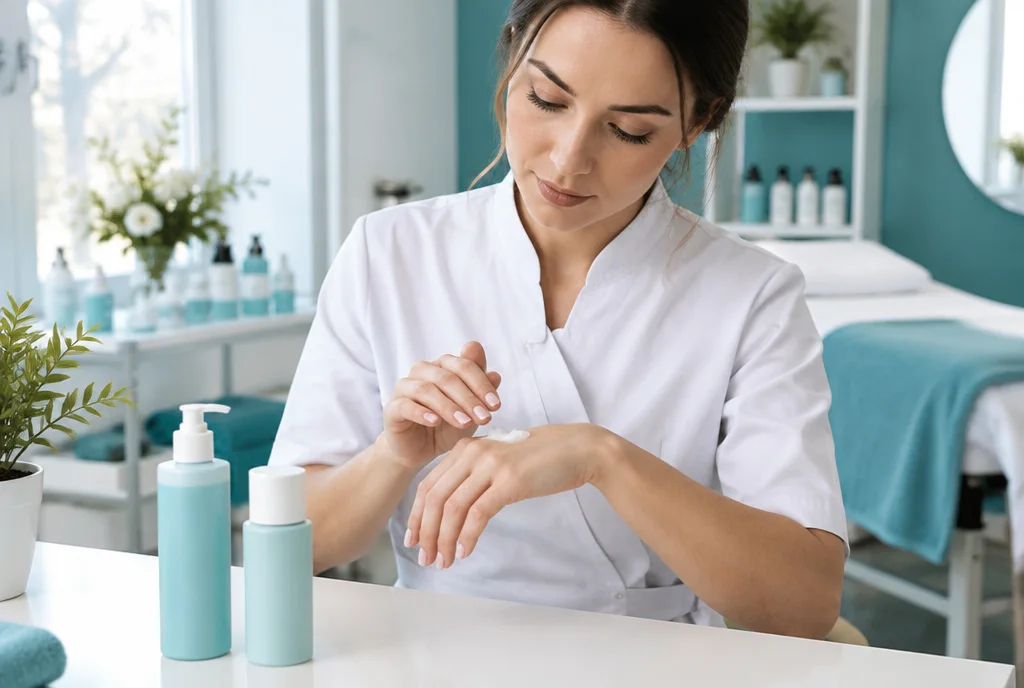
GMP production and the ISO 22716 standard
Article 8 of Regulation 1223/2009 requires cosmetics to be manufactured in line with good manufacturing practice. Compliance is presumed where the manufacturer applies harmonised standards published in the Official Journal of the EU. For cosmetics that standard is EN ISO 22716, covering among other things personnel, premises, equipment, raw materials, quality control, complaints and product recalls.
When professional dermocosmetics for salons come from a new manufacturer, ask whether the plant holds a certificate of compliance with ISO 22716 issued by an external body and what cleanliness standards it applies. In our distribution, ZQ-II Medical Skin Care declares production to the GMP 10,000 standard, which matters especially for the ampoules in the Meso Therapy line, containing PDRN and copper peptides. You will find details of the brand’s six lines on the ZQ-II cosmetics for the salon page.
A dermocosmetic brand for salons: lines, protocols, manufacturer
A good dermocosmetic brand for salons has a divided offer: a professional line in larger packs and at higher concentrations for work at the treatment chair, and home care that continues the treatment. If a brand has only the salon part, the result depends solely on visits, and you lose retail sales.
- Treatment protocols: set out step by step, with application times, contraindications and post-treatment recommendations. FR~HAUT offers close to 20 lines, including the Treatment 5+1 treatment sets and the Exotech exosome line.
- Problem-specific lines: M.A.D Skincare is a range of American dermaceuticals in problem-specific lines, with Medi Peel salon peels and home care.
- Training on the product: the team should practise on the same products that will go on the shelf.
- Availability: a warehouse in Poland means a shorter wait for a missing product.
- Continuity of formulations: ask how the manufacturer communicates changes in composition and the withdrawal of a line.
Close the assessment of the manufacturer with a conversation about terms: access to a B2B account, the minimum order and sales support. We write about how to match lines to the treatment menu in the guide to professional cosmetics for the salon. Before any dermocosmetic brand for salons enters your offer, test it on a few clients with full photographic documentation.

Testing a brand in the salon before adding it to the menu
Before professional dermocosmetics for salons go on the price list, run a pilot on your own clients. Documents and ingredients show whether a product is legal and well designed. A pilot shows how it behaves on the skin of the people who come to your salon, in your conditions and with your working techniques. A sensible test period is 8 to 12 weeks, which is how long a series of treatments with home care usually lasts.
- Choosing the group: 5 to 10 regular clients with different skin types who come for visits regularly and will agree to photographic documentation.
- One protocol: everyone on the team performs the treatment according to the same manufacturer’s procedure, with the same application times.
- Photographs and measurements: a baseline photograph in constant light, a hydration measurement with a corneometer if you have the device, and a repeat after the series ends.
- Record of tolerance: erythema, stinging, itching, flaking, assessed 24 and 48 hours after the treatment.
- The client’s opinion: a short questionnaire rating from 1 to 10 comfort of use, scent, texture and visible result.
After the pilot you make a decision on the basis of three questions. Is the result visible in the photographs and measurements in most participants? How many people reported irritation and how quickly did it subside? How many clients bought the product for home use after the test ended? A dermocosmetic brand for salons that passes these three questions has a justified place on the menu. The result of the pilot will also be useful later, in conversations with new clients.
Do not invite to the pilot clients who are pregnant, undergoing dermatological treatment, fresh from aesthetic medicine procedures or with active inflammatory lesions in the treatment area. Their skin reaction may result from factors other than the product, and the test is meant to show how professional dermocosmetics for salons behave in typical people from your client base. Also record which products each participant uses at home, to separate the effect of the tested line from the rest of her skincare.
How to document the pilot
Every client in the test has a card with the product name, batch number, date of treatment, working parameters and a description of the skin’s reaction. Take photographs from the same distance, in the same lighting and without make-up, in three shots: front-on and two profiles. Take the corneometer measurement after the client has rested in the salon for 15 to 20 minutes, at the same points on the face. Take the last photograph after the series ends, before the purchase decision.
Agree the terms of the test with the distributor before it starts. Ask whether the dermocosmetic brand for salons has starter kits or smaller sizes intended for trial, and what happens to unopened goods if the line does not pass the pilot. Professional dermocosmetics for salons bought in full sizes for a test with 5 clients often stay on the shelf as opened packs past their date, which inflates the cost of the pilot and distorts its assessment.
Professional dermocosmetics for salons and the treatment menu
You match professional dermocosmetics for salons to the skin problems your clients come with, and only then to the brand’s other features. Start with an analysis of the calendar for the last 6 months: which treatments you perform most often, which problems clients complain about at consultation and which services are missing from the menu. On that basis you check whether the new line fills a gap or duplicates products you already have on the shelf.
| Skin problem | What you look for in a line | Question for the distributor |
|---|---|---|
| Acne and oily skin | Salicylic acid peels, light skincare formulas | What are the pH and concentration of the peel? |
| Hyperpigmentation | Brightening ingredients, high-protection sunscreen for home use | Does the protocol take phototypes IV to VI into account? |
| Redness-prone and sensitive skin | Short ingredient lists, fragrance-free formulas | Which irritants does the line contain? |
| Mature skin | Retinoids, peptides, antioxidants | Which form of retinoid does the product contain? |
| Skin after treatments | Soothing and barrier-rebuilding products | Is the product intended for a compromised barrier? |
A dermocosmetic brand for salons rarely covers all the problems in the table equally well. When one line gives you strong peels and another better care for redness-prone skin, you can work with both, provided each has its own range of treatments. At Este Group this division looks, for example, like this: M.A.D Skincare covers problem-specific lines and Medi Peel salon peels, and FR~HAUT offers close to 20 lines, including the Exotech exosome line.
When expanding the menu, also count the number of items. For a new line, one or two treatments and 3 to 5 home products that continue them are usually enough to start with. A larger number of items lengthens team training, increases stock on the shelf and makes the choice harder for the client. You add further products once the first treatments have steady bookings.
Treatment price and season
You set the price of a new treatment on the basis of the cost of product per visit, disposables, working time and the prices of similar services in your area. A dermocosmetic brand for salons that states product consumption per treatment in the protocol lets you calculate this cost before the first order. Allow for the season too: acid peels and intensive retinoid courses are usually planned from autumn to early spring, when UV exposure is lower, and in summer you shift the weight of the menu to hydrating and soothing treatments.
A dermocosmetic brand for salons and the home-care plan
The result of a treatment lasts longer when the client uses products matched to the protocol between visits. That is why you also assess professional dermocosmetics for salons through their home-care part: whether it continues the treatment, whether it is simple to use and whether the client will understand what to apply and when. A plan written on paper or in a message after the visit works better than verbal recommendations at reception.
- The first 72 hours after the treatment: gentle washing, a soothing cream, SPF 50 sunscreen, no acids, retinoids or mechanical scrubs.
- Weeks 1 and 2: a return to basic care from the line, with no new active ingredients.
- From week 3: gradual introduction of an active ingredient, for example a retinoid 2 to 3 evenings a week, with tolerance assessed before increasing the frequency.
- Every morning: high-protection sunscreen, on cloudy days and in winter too, especially during a series of peels.
- Before the next visit: stopping acids and retinoids for a few days, in line with the treatment protocol.
The conversation about home products
A recommendation of a home product works best when it follows from what the client saw during the treatment. Show her the product you used, explain how the home version differs and say how long a pack will last with daily use. Professional dermocosmetics for salons often have home versions at a lower concentration, so it is easy to justify why the client is given a product from the same line to take home. At the next visit ask how she used it and record the answer on the card.
A dermocosmetic brand for salons that has lower-concentration counterparts of its treatment products in the home line makes it easier for you to set out such a plan. The client then uses products of known composition, and you can more easily establish the cause of any irritation. When a client combines products from several brands, check at the next visit exactly what she applies and record it on the card. We describe how to assess the result of the home plan in measurable parameters in the article on skin quality from a scientific perspective.
Mistakes when introducing a new brand
When professional dermocosmetics for salons enter the offer, problems usually appear in the first weeks, and their source is rarely the product itself. Most come from the organisation of work and communication with clients. The list below gathers the situations that most often lower a new line’s results.
- Too broad a start: ordering the whole line at once ties up cash and makes it harder to assess which products actually work in your menu.
- Training only one person: when only the owner knows the protocol, the others on the team perform the treatment by feel, and the result depends on who sees the client.
- Mixing brands in one protocol: combining one company’s peel with another’s ampoule without the consent of both manufacturers makes it harder to assess tolerance and to make a complaint.
- No opening date on the packaging: the period after opening counts from first use, so without a recorded date it is easy to work with an out-of-date product.
- Promises on social media: Article 20 of Regulation 1223/2009 also applies to advertising, so a salon’s posts about treating acne or atopic dermatitis may breach the rules on cosmetic claims.
- Storage by a window or radiator: light and heat speed up the breakdown of vitamin C, retinoids and some peptides, even when professional dermocosmetics for salons have a long shelf life.
- No home plan: a client without written recommendations goes back to her old products, and the result of the series fades faster.
Each of these mistakes can be caught at a meeting with your account manager after 3 months. Compare the number of treatments, sales of home products, reports of irritation and stock on the shelf with the assumptions from the pilot. If a dermocosmetic brand for salons falls short on any of these points, check training and communication first, and only then the line itself. Often it is enough to repeat the protocol training, improve the treatment description on the price list and hand clients the home plan in writing for the results in the next quarter to change clearly.
The most common questions about professional dermocosmetics for salons
Can a dermocosmetic treat skin diseases?
A cosmetic serves to care for and protect the skin. Products intended for treatment are subject to the rules on medicinal products. Professional dermocosmetics for salons can accompany therapy recommended by a doctor, but refer a client with skin lesions to a dermatologist first.
How do I check whether a product is notified in the EU?
Cosmetics are notified in the EU’s CPNP portal before being placed on the market. Before you order professional dermocosmetics for salons, ask the distributor who the responsible person is and request confirmation of the notification.
How many products should I order to start with?
As many as the planned series of treatments and home sales in the first weeks require. Stock calculated in quarters ties up cash and shortens the shelf-life margin.
How long does a test of a new brand in the salon take?
Usually 8 to 12 weeks, which is how long a series of treatments with home care lasts. A shorter test lets you assess tolerance and comfort of use, but the result in photographs and measurements shows only after the series ends. To assess home sales you need another 4 to 6 weeks after the last treatment.
Can two brands be combined in one treatment?
It is safer to keep to one manufacturer’s protocol within a treatment. You can use professional dermocosmetics for salons from different companies in separate treatments, and agree any combination in one procedure with the distributor of both lines.
For the salon in brief: professional dermocosmetics for salons are legally cosmetics, so assess them by their documentation, the responsible person in the EU, the INCI list, the quality of application studies and production in line with ISO 22716. A brand worth introducing has a salon line, a home line, protocols and training.
Would you like to compare brands with your treatment menu in mind? Book a free consultation and see how the Este Group professional cosmetics wholesaler works.