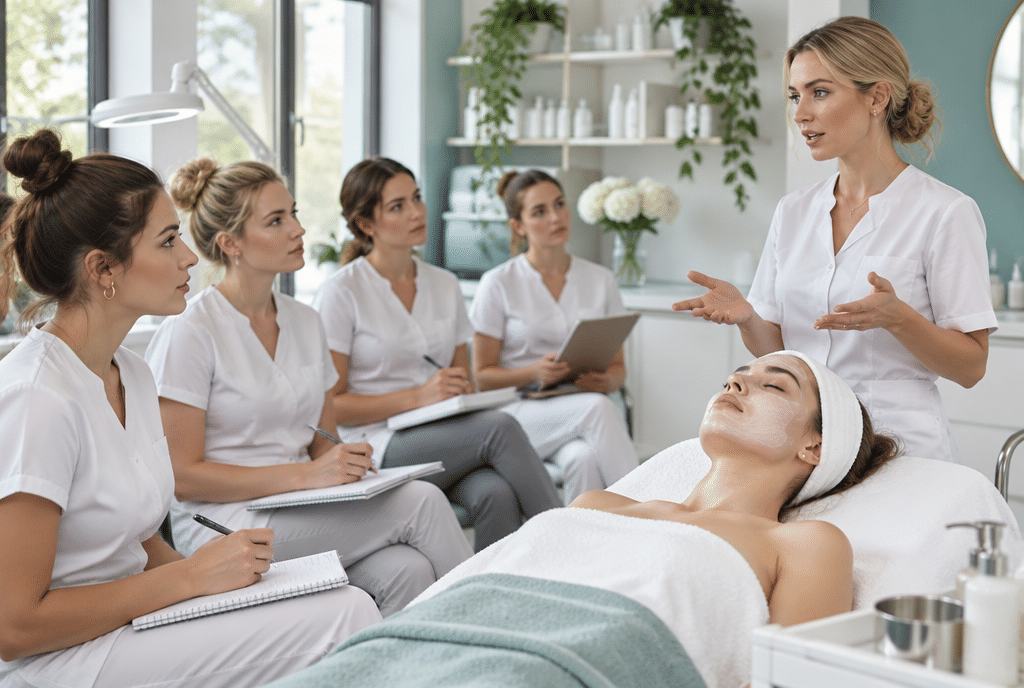
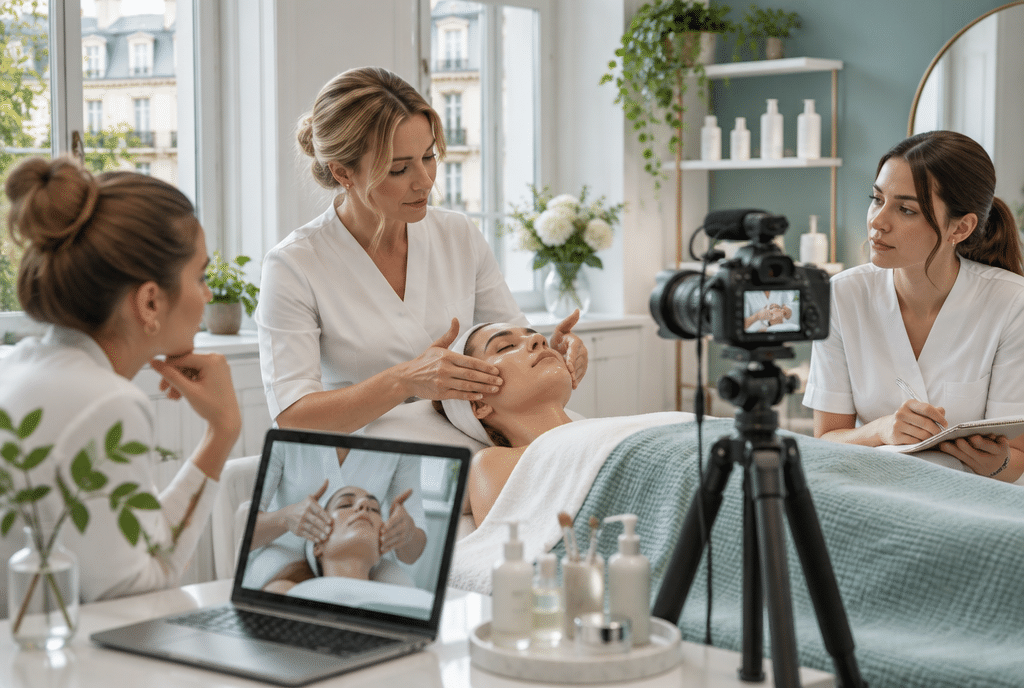
Training in care for redness-prone skin in Wrocław is one of the best investments in the development of your salon. It teaches work in which the value lies not in the strength of the treatment but in knowledge, the choice of gentle ingredients and consistency. Redness-prone skin and skin with a tendency to rosacea is reactive, easy to irritate and easy to make worse with too aggressive a treatment, so good training puts the emphasis on understanding the mechanism and on safety.
What is worth understanding and what the training teaches
Redness-prone skin is skin with a tendency to flushing, a stinging sensation and a weakened barrier. Good training starts with understanding why such skin overreacts to stimuli and why rebuilding the barrier is the starting point here, not an extra. On that basis you learn to choose treatments and ingredients that calm the skin and do not provoke it. We develop the context of the barrier in the article on the hydrolipid barrier.
With redness-prone skin the value lies not in the strength of the treatment but in knowledge, the choice of gentle ingredients and consistency.
Ingredients and treatments that make sense
In training you get to know ingredients and treatments proven in redness-prone skin and the rules for choosing them:
- Azelaic acid: support for redness-prone skin and work on tone.
- Niacinamide and panthenol: calming and support for the barrier.
- Gentle acids, mandelic and PHA: delicate exfoliation where stronger protocols irritate.
- Strict sun protection: sunscreen as the foundation, because radiation aggravates the changes.
You will find a wider view of the service itself in the article on care for redness-prone skin in the salon.
What to avoid with redness-prone skin
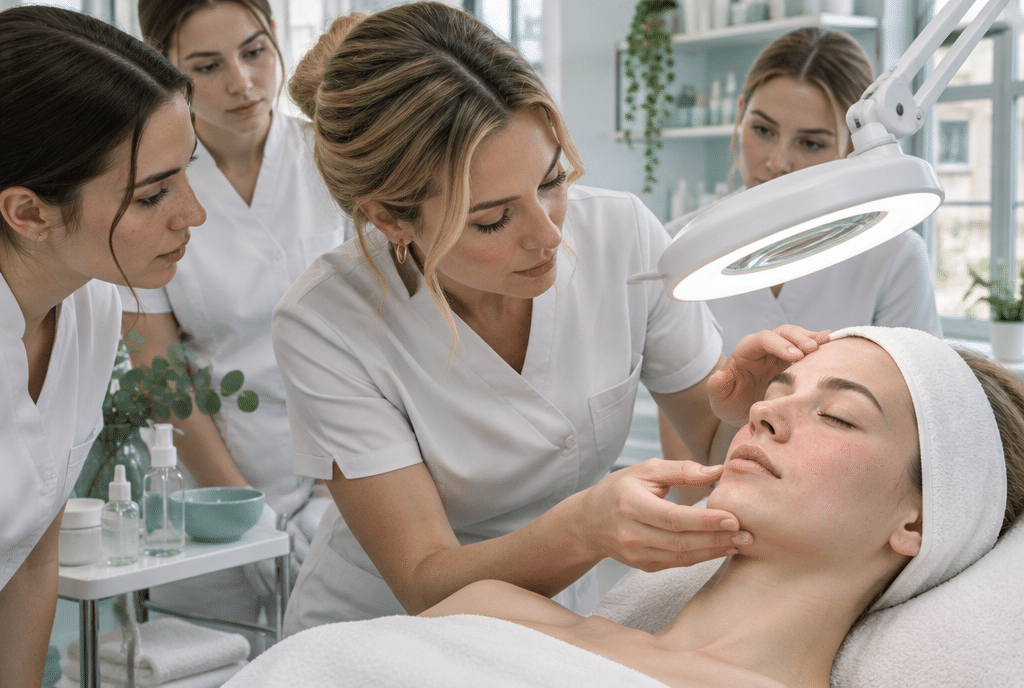
Many deteriorations come from treatments that heat or mechanically irritate the skin. The training teaches caution with intensive abrasion, treatment saunas, strong peels and anything that raises the temperature of the skin. It also shows gentler cleansing alternatives, such as hydrogen cleansing, which requires neither heating nor aggressive exfoliation.
Practice, client education and working with a doctor
On models you practise running gentle treatments and choosing ingredients after assessing the skin. Good training also teaches you to distinguish redness-prone skin from diagnosed rosacea and to know when to refer a client to a dermatologist, because rosacea is a disease that a doctor diagnoses and manages. It also teaches you to educate the client about aggravating factors, because a lot of redness comes from everyday habits. We develop reading the skin in skin diagnostics training.
Client education and aggravating factors
With redness-prone skin, educating the client can be as important as the treatment itself, because a lot of redness comes from everyday habits. Good training teaches you to talk about aggravating factors and help the client limit them. The most common include sudden changes in temperature, hot baths and saunas, spicy food, alcohol, stress, and sun and wind without protection. A helpful tool is a short diary in which the client notes what the redness follows, because she then begins to notice patterns herself, and you can choose her skincare more easily.
The training also teaches you to set a realistic time horizon: improving the comfort of redness-prone skin is a matter of weeks of consistent, gentle care, not of one visit. A client who understands these links and knows that the aim is calmer, less reactive skin, not the removal of capillaries, is disappointed less often and stays for longer.
The most common questions about training in care for redness-prone skin in Wrocław
Will I learn to remove capillaries?
No, closing capillaries with high-energy devices is a separate area. The training teaches you to improve the condition and comfort of redness-prone skin and to limit the factors that intensify redness.
Are peels safe for redness-prone skin?
Yes, provided they are gentle acids chosen after a skin assessment and at an appropriate concentration. The training teaches you to match the strength of the treatment to the reactivity of the skin and to avoid heating protocols.
When should I refer a client to a dermatologist?
Always when rosacea is suspected, with severe inflammation or with no improvement. The training teaches you to recognise these situations, because working with a doctor increases the safety and effectiveness of care.
For the salon in brief: training in care for redness-prone skin in Wrocław in a nutshell: work with redness-prone skin rests on rebuilding the barrier, gentle ingredients and consistency. Good training teaches you to choose safe treatments, avoid triggers and recognise when to refer a client to a doctor.
Would you like to build a safe, knowledge-based offer for redness-prone skin? Book a call with Este Group or check the dates on the beauty training in Wrocław page. We will plan training in care for redness-prone skin in Wrocław around your salon step by step, and you can check professional cosmetics for your work among the professional cosmetics in Este Sklep.