A professional cosmetics distributor is responsible for more than the price on the price list: the legality of the product on your shelf, the continuity of your schedule and whether the team knows how to work with a given line all depend on it. When choosing, it therefore pays to check a few hard facts before you place the first order. Below is a list of criteria in the order in which problems most often come to light.
The professional cosmetics distributor and the responsible person
The starting point is Regulation (EC) No 1223/2009 on cosmetic products. Under Article 4, only cosmetics for which a responsible person has been designated within the Union, in Polish practice called the responsible entity, are placed on the market. It is that person who, under Article 13, notifies the product electronically to the Commission, that is to the CPNP portal, before the cosmetic is placed on the market. The entry in the CPNP is a notification and does not constitute permission to sell.
A professional cosmetics distributor has its own obligations under Article 6: before making a product available it checks whether the label contains the required information, whether the language requirements are met and whether the date of minimum durability has passed. It is also responsible for storage and transport conditions that do not jeopardise the product’s compliance. So ask directly who the responsible person is for a given brand and whether the company has written authorisation from the manufacturer. In the case of FR~HAUT, Este Group performs this function in the EU.
- Name and address of the responsible person: they must be on the packaging, so they are easy to compare with the details of the company you buy from.
- Brand authorisation: a written distribution agreement or confirmation from the manufacturer that the distributor can show.
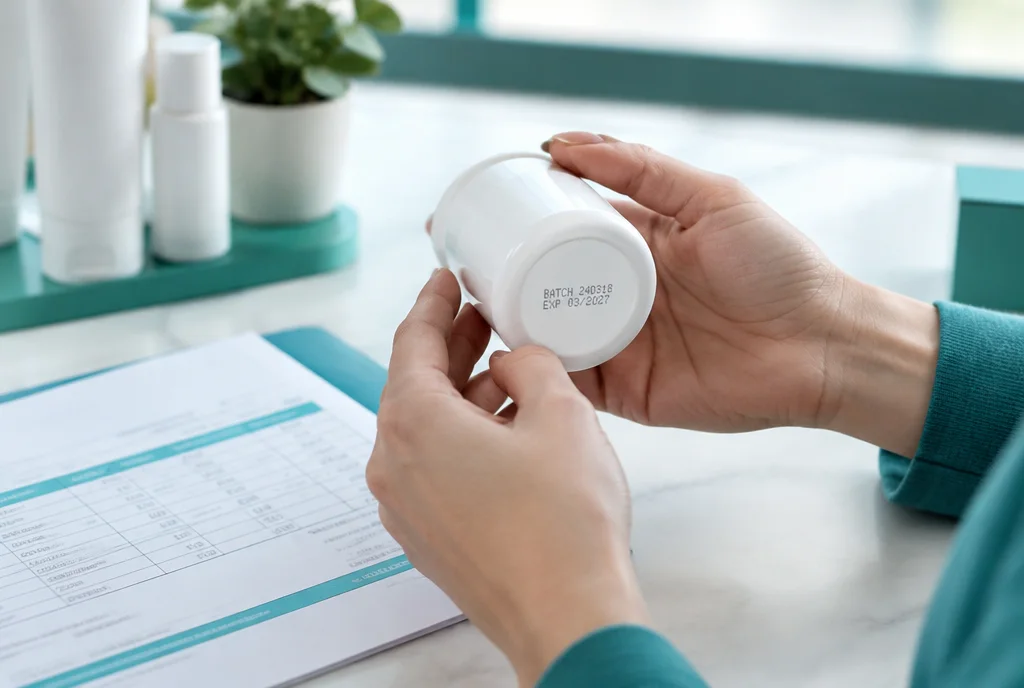
- Batch number: allows a specific batch to be withdrawn if the manufacturer announces a quality problem.
A warehouse in Poland and delivery time
For a salon, a stock of cosmetics is cost tied up on the shelf, so when choosing which cosmetics distributor for beauty salons will serve your business, the time between order and delivery counts. A warehouse in Poland shortens that time to a few working days and reduces the risk that ampoules for a treatment series arrive after the appointment date. With import to order come international transport and customs clearance, and with them uncertainty about the date.
A professional cosmetics distributor with a warehouse in the country should be able to state the average order lead time straight away. Also ask about the availability of consumables for devices and how the company communicates shortages. Este Group runs a warehouse in Poland, which for cartridges and products for treatment series means a shorter wait. We described how to match lines to the menu and calculate the shelf in the guide to professional cosmetics for the salon.

A cosmetics distributor for beauty salons: B2B accounts and verification
A reliable cosmetics distributor for beauty salons makes professional lines available after verifying that the buyer is a salon. For you this is a protective signal: high-concentration products go to trained people, and partner prices and treatment products do not end up on auction sites at wholesale cost. A B2B account also gives you an order history, invoices in one place and usually faster reordering.
When a professional cosmetics distributor sells salon products to anyone without questions, expect that a client will find the same product online for less than your treatment. At Este Group a B2B account for a salon is opened after verification, and regular salons can join the Este Salony partner programme.

Protocols, training and retail counterparts
A product without a treatment procedure forces the team to guess concentrations, exposure time and the order of layers. A good professional cosmetics distributor supplies protocols in writing and trains you in working with a specific line, ideally hands-on. Este Group runs beauty training in Wrocław, at its own training centre in Żerniki Wrocławskie, with practice on models.
A cosmetics line starts earning only when the whole team performs the treatment according to the same protocol.
The second element is retail counterparts. A line that has a home-care part lets you extend the result of the treatment and builds revenue between visits. Check whether the professional cosmetics distributor offers home products from the same brand and whether the client can also buy more of them outside the salon. We describe the mechanics of add-on sales in the article on retail sales in the beauty salon.
After-sales support, payments and the logistics minimum
After the first order, day-to-day cooperation begins, and how a cosmetics distributor for beauty salons copes with service shows in the details. Before you sign the terms, compare offers on these points:
- Salon account manager: one contact person who knows your menu and answers questions about a product or a skin reaction.
- Complaints and returns: a written procedure, a time limit for handling and rules for products damaged in transport.
- Payment terms: prepayment, cash on delivery or deferred payment, and discount thresholds calculated on order value.
- Logistics minimum: the order value threshold, free delivery and whether you can order small batches for the current schedule.
- Sales support: materials for clients, loyalty programmes and advice on pricing treatments.
Este Group combines distribution with business advice and the Este Beauty Benefit and BAY CASH programmes, and salons particularly close to the FR~HAUT brand can take part in the FR~HAUT Ambassador programme.
Red flags: the grey market and labels without Polish
Regulation 1223/2009 requires the content, the date of minimum durability, the precautions and the function of the product to be given in the language of the country where the cosmetic reaches the user, and the Polish Act on cosmetic products of 2018 settles that in Poland this is Polish. A professional cosmetics distributor should therefore stop a cosmetic with a label only in a foreign language before it reaches the salon.
- A price clearly below the market: a frequent sign of goods from parallel import, from end-of-line batches or from an unknown source.
- Labels without a Polish version: stickers added by hand or none at all on the unit packaging.
- Obliterated batch numbers: make it harder to verify origin and to withdraw a batch.
- Sales through private accounts and messaging apps: without an invoice, without company details and without the possibility of a complaint.
- A short expiry date without notice: a product that will run out halfway through a client’s treatment series.
A grey-market cosmetic shifts the risk onto the salon: if a client’s skin reacts, it is hard to establish who is responsible for the product and how it was stored. A proven cosmetics distributor for beauty salons issues an invoice for every delivery and can identify the origin of the batch.
Auditing the offer before signing an agreement
A sales conversation shows how a professional cosmetics distributor presents its offer. An audit shows what that offer looks like in documents and on your clients’ skin. Plan it for 4 to 8 weeks and carry it out in a fixed order, so as to compare two or three companies against the same criteria.
- Product data sheet: the full INCI list, pH for acid products, volume, period after opening and storage conditions. The absence of any of these data for a treatment product means a question for the manufacturer.
- Treatment protocol: a written version with the order of stages, application time, contraindications and post-treatment recommendations, in Polish.
- Samples and test sizes: let you assess texture, scent, yield and tolerance in clients before you order full sizes.
- Test on clients: 3 to 5 people with different skin types, with a treatment card, a baseline photograph and a record of the skin’s reaction within 48 hours.
- Commercial terms in writing: the partner price list, the free delivery threshold, payment terms, returns policy.
The full product documentation, that is the PIF with the safety report, stays with the responsible person and is made available to the supervisory authorities. Some information must, however, be publicly accessible: under Article 21 of Regulation 1223/2009 the responsible person makes available the qualitative and quantitative composition of the product as regards hazardous substances, and data on undesirable effects. A professional cosmetics distributor that works directly with the manufacturer will pass this information on to you or tell you where to find it.
Record the result of the audit in a simple table: a column for each company, a row for each criterion, a score from 1 to 5. A comparison prepared this way lets you choose which cosmetics distributor for beauty salons stays in your menu on the basis of data from the salon. Along the way it comes to light how quickly the company answers questions and whether its adviser knows the composition of the products it sells.
Questions you ask at the first meeting
- About origin: who the responsible person is, where the product is made and whether the distributor has an agreement directly with the manufacturer.
- About continuity: how the company communicates changes in formulation, product withdrawals and breaks in supply.
- About training: how many hours of practice the line training includes, whether it takes place on models and whether a new employee can repeat it.
- About skin reactions: who in the company responds to a report of irritation and how quickly.
- About the starting minimum: whether you can begin with one treatment set and a few home products before you order the whole line.
Cost per treatment and stock rotation
The price on the price list says little until you convert it into a single treatment. A professional cosmetics distributor should state how much product is used in one treatment according to the protocol, because that number decides the cost of the service. Divide the price of the pack by the number of treatments you will get from it and add the cost of disposables. An example: a 200 ml pack at 4 ml per treatment is enough for 50 treatments, so the cost of product per visit is one fiftieth of the pack price.
This calculation is worth doing for every treatment on the menu before introducing a new line. You then compare the cost of product with the current supplier and with the new one, at the same price of the service for the client. The difference in margin on one treatment seems small, but multiplied by the number of treatments in a year it shows whether changing supplier makes sense. A cosmetics distributor for beauty salons that knows your menu will help prepare such a comparison.
The second variable is time. A product with a 6-month period after opening has to be used up within that time, otherwise part of the pack goes in the bin and the cost per treatment rises. That is why for a treatment performed once a month you choose a smaller size, even if the price per millilitre is higher. We write more about calculating the shelf and choosing sizes in the guide to professional cosmetics for the salon.
- Cost of product per treatment: the pack price divided by the number of treatments according to the protocol.
- Period after opening: the open jar symbol on the packaging, with a number of months.
- Rotation: the number of treatments of a given type per month, from your calendar for the last 3 months.
- Safety stock: the amount that covers treatments until the next delivery, given a known order lead time.
When a cosmetics distributor for beauty salons fulfils orders within a few working days, the safety stock can be small and the cash stays in the business. With deliveries counted in weeks you have to hold more goods and keep an eye on expiry dates. These two numbers, delivery time and rotation, determine how much you order each time.
Approach discounts for a single large order with caution. A reduction of a few per cent stops paying off when part of the goods passes its expiry date or ties up cash for six months. Before such a decision, check in the calendar how many treatments of a given type you performed in the last quarter and compare that number with the yield of the packs you are ordering. A professional cosmetics distributor with a domestic warehouse lets you order more often and in smaller batches, so a threshold discount calculated on quarterly turnover is usually more favourable for a salon than a discount on a single invoice.
The professional cosmetics distributor, receiving a delivery and skin reactions
Every parcel from a supplier is the moment at which you take over responsibility for storing the product. You check it with the courier present or on the same day, and every professional cosmetics distributor should clearly state the time limit within which it accepts a report of damage in transport. A photograph of the damaged parcel taken with the courier present and a damage report signed on the spot speed up the complaint.
- Agreement with the invoice: names, sizes and number of items.
- Condition of packaging: intact seals, ampoule protection, no leaks.
- Dates and batches: an expiry date longer than the planned use, a legible batch number on every pack.
- Label in Polish: on the unit packaging or on a label permanently attached to it.
- Storage conditions: products go straight into a cupboard or fridge in line with the requirements on the label, away from light and radiators.
Storage in the salon
Arrange products according to the rule: you use first what has the shortest expiry date. On a pack opened for the first time, write the opening date with a marker, because the symbol on the label gives a number of months but does not say when that time started. Keep products that require refrigeration in a separate fridge, apart from food, with a thermometer. When a cosmetics distributor for beauty salons supplies products with special requirements, ask for them in writing together with the product data sheet.
You copy the batch number onto the treatment card for every client. When a skin reaction occurs, this information lets you establish which pack the product came from and whether similar reports concern other salons. Article 23 of Regulation 1223/2009 obliges the responsible person and distributors to report serious undesirable effects to the competent authority, in Poland the State Sanitary Inspectorate.
For the salon this means a simple procedure. You document the reaction with a photograph and a description, stop using the product, set aside the pack with the batch number and notify the supplier in writing. A reliable cosmetics distributor for beauty salons accepts the report, passes it on to the responsible person and informs you of the next steps. You refer a client with severe swelling, blisters or shortness of breath to a doctor.
A cosmetics distributor for beauty salons in the first quarter of cooperation
Introducing a new line usually takes about 90 days: from team training, through the first treatment series, to the first assessment of sales. Break this period down into stages and agree them with your account manager, because a good professional cosmetics distributor has specific tasks on its side during this time.
- Weeks 1 and 2: hands-on training for the whole team, the protocol printed out at the workstation, the price of the treatment on the salon’s price list.
- Weeks 3 and 4: the first treatments on regular clients, baseline photographs, information materials for reception.
- Month 2: introducing home products into post-treatment recommendations, the first reorder.
- Month 3: a meeting with the account manager, a review of the number of treatments, retail sales, returns and skin reactions.
Use the same schedule for every new employee. A professional cosmetics distributor that runs its own training centre can train her in the line within a few weeks of her being hired, before she starts performing treatments on her own. Este Group runs such training at its own centre in Żerniki Wrocławskie, with practice on models. As a result the whole team works to one protocol, and the treatment card looks the same regardless of who saw the client.
At the meeting after three months, compare four indicators: the number of treatments performed from the new line, the percentage of clients who bought a product for home use, the cost of product per treatment from actual consumption, and the number of reports concerning tolerance. If the cosmetics distributor for beauty salons proposes expanding the order, set that against these data. We describe how to calculate and increase the share of home products in the article on retail sales in the beauty salon.
The most common questions about a professional cosmetics distributor
How do I check whether a distributor is authorised by the brand?
Ask for confirmation of authorisation from the manufacturer and compare the details of the responsible person on the packaging with the company’s details. You can also ask the manufacturer directly which professional cosmetics distributor has the right to sell its lines in Poland.
Does notification in the CPNP mean that a cosmetic is approved for sale?
Notification is an obligation of the responsible person before the product is placed on the market, but it is neither a permit nor a quality certificate. The responsible person remains responsible for the safety of the cosmetic.
Is one distributor enough for the whole salon?
With two or three brands on the menu, one cosmetics distributor for beauty salons simplifies logistics, training and settlements. A larger number of suppliers makes sense when each line covers a different group of treatments.
How often should I place orders?
Often enough for the stock to cover treatments until the next delivery, with no pack exceeding its period after opening. When a professional cosmetics distributor delivers goods within a few working days, an order every 2 or 3 weeks is usually enough. For seasonal treatments, such as acid peels in autumn and winter, increase orders for those months.
What should I do when a client reacts to a product?
Stop using it, take photographs, record the name and batch number, and set the pack aside. Report the matter to the supplier in writing. In the case of swelling, blisters or shortness of breath the client should contact a doctor immediately.
For the salon in brief: check the responsible person and brand authorisation, Polish labels and batch numbers. Compare delivery time from a warehouse in Poland, the rules for B2B accounts, protocols and training, retail counterparts and payment terms. A price below the market and labels without Polish are a reason to let the offer go.
Are you looking for a distributor with whom to build your treatment menu and retail shelf? Book a free consultation and check the terms offered by the Este Group professional cosmetics wholesaler.