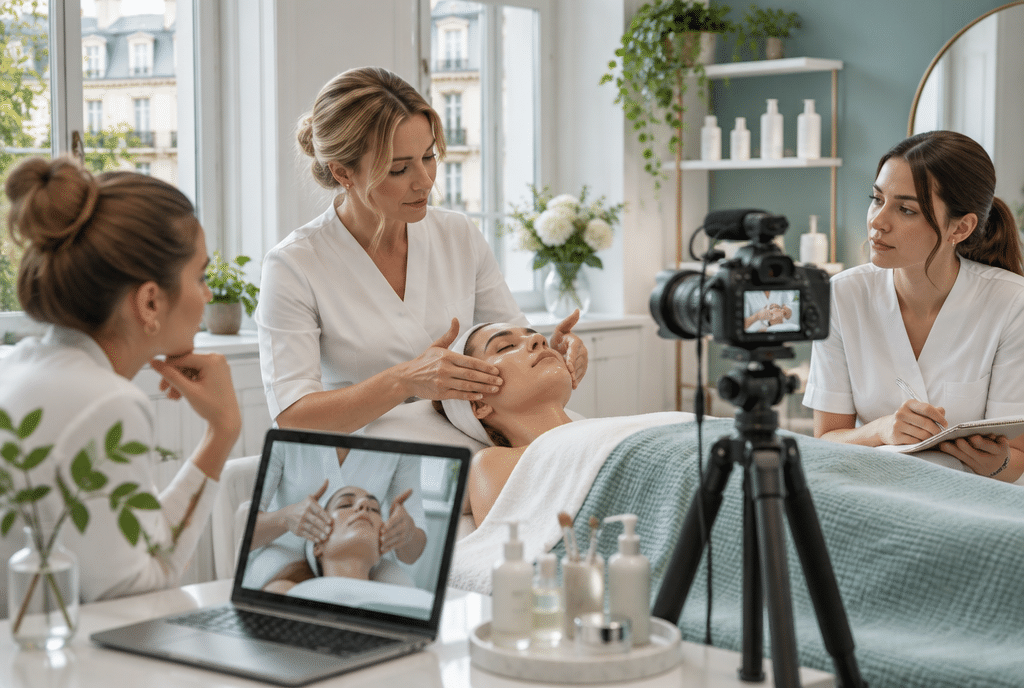

The smallest molecule in the universe has had a career in cosmetology that nobody predicted for it. Molecular hydrogen, treated for decades as a biologically inert gas, appeared in the pages of Nature Medicine in 2007 as a selective antioxidant, and a dozen or so years later it drives some of the most frequently performed skincare treatments in Polish salons. We check what science really says about hydrogen, what results hydrogen cleansing gives and where the line runs between data and marketing.
2007: an inert gas stops being inert
The turning point was the paper by Ikuroh Ohsawa’s team published in Nature Medicine, which showed that molecular hydrogen acts as a selective antioxidant: it neutralises the most cytotoxic radicals, including the hydroxyl radical, without touching the signalling molecules cells need for normal work. This selectivity distinguishes it from classic antioxidants, which can sweep away everything indiscriminately.
Since that publication the literature on hydrogen has grown to hundreds of papers in medicine, from models of ischaemia to inflammatory conditions; a review of mechanisms was compiled, among others, by Shigeo Ohta in Pharmacology and Therapeutics in 2014, and current research is easy to follow in PubMed. For the skin, molecular hydrogen has two natural arguments: its size, thanks to which it diffuses where large molecules have no access, and the selectivity mentioned, valuable in a tissue constantly exposed to oxidative stress from the sun and pollution.
From the test tube to the treatment chair: how hydrogen cleansing works
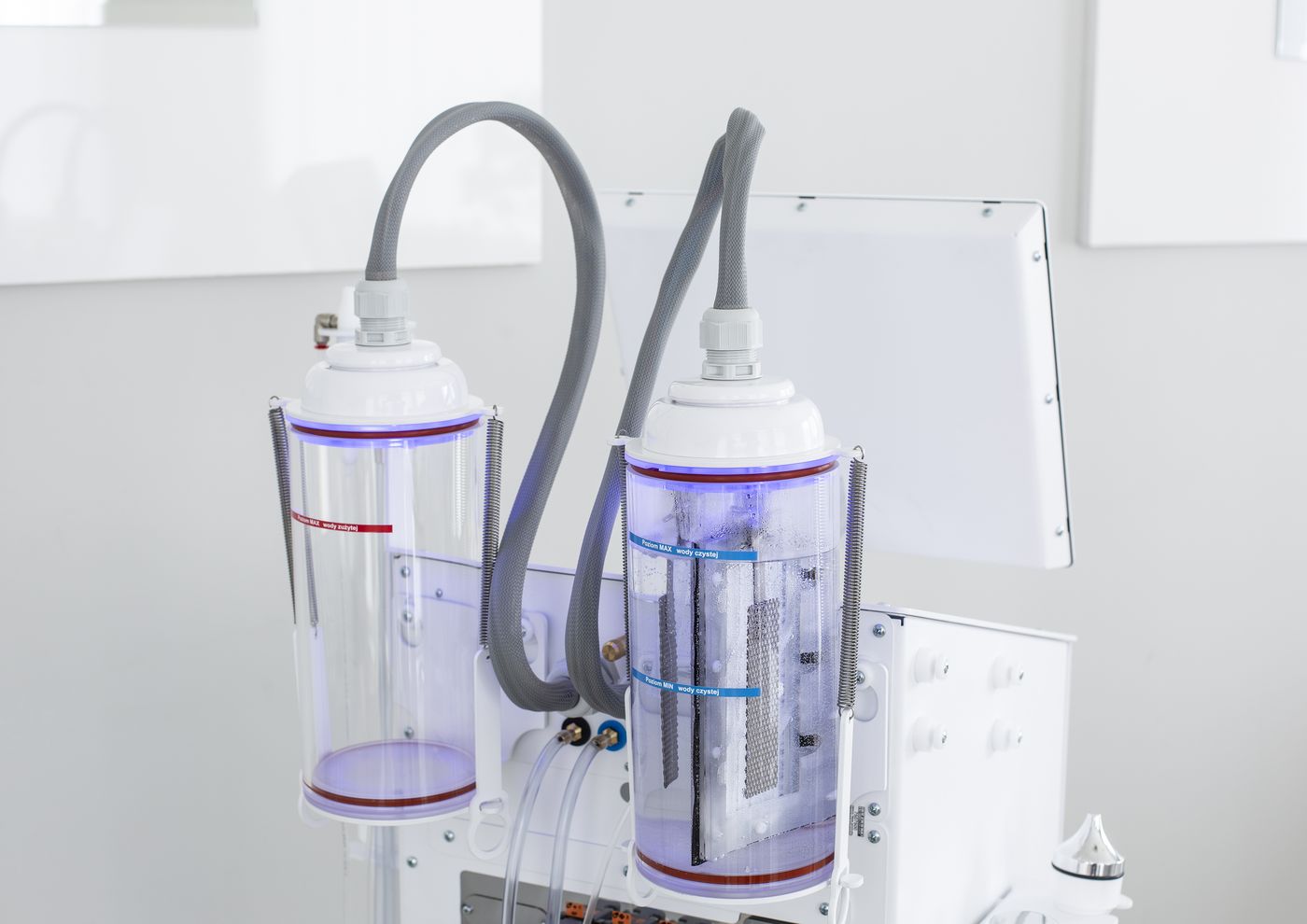
In the salon, molecular hydrogen works in water. Through electrolysis the device generates water rich in active hydrogen, with a negative oxidation-reduction potential in the order of minus 300 to minus 800 millivolts, whereas ordinary water has a positive potential. This water, delivered through a hydrodermabrasion head, combines three actions in one pass: mechanical cleansing and exfoliation, dissolving impurities in the pores, and an antioxidant component on the skin surface.
A key technical detail: active hydrogen is unstable, so it cannot be bottled in advance. It has to be produced continuously, during the treatment, and that is why the quality of the procedure is decided by the generator, not the name on the casing. We set out what to look for in the specification, from the electrodes to the ORP, on the page about which hydrogen cleansing and device to choose for the salon.
Hydrogen cleansing: results you can see and results you can feel
After a single treatment the client sees three things: skin cleansed deep into the pores, an evened-out tone and the characteristic effect of freshness that appears on price lists as glow. This is thanks to the combination of exfoliation with oxygenation and hydration. With work in a series, at a monthly rhythm, comes smoothing of minor imperfections and a better condition of oily and dehydrated skin, which makes the treatment a natural candidate for a subscription.
An honest framing reads: hydrogen cleansing is an excellent skincare and entry-level treatment, not a medical therapy. Promise freshness, cleanliness and skin comfort, not results reserved for procedures from another shelf.
It is also worth adding what hydrogen will not do: it will not replace work on established wrinkles, scars or laxity, because that is the domain of technologies that stimulate skin remodelling, such as microneedle radiofrequency. In a well-arranged menu these treatments do not compete; they follow one another.
Place on the menu: an entry-level treatment that prepares the ground
From the salon’s point of view, hydrogen cleansing has three professional advantages. It is year-round and has no downtime, so it fills the schedule even when acid and fractional procedures are dormant. It is well known, so it does not require educating the market. And it is an excellent first contact: a client who came for an hour of skincare will tell you about her real needs in the chair, and from there it is a short way to a series, regenerative protocols and premium items. We described how to set up this ladder on the price list in the guide to the treatment menu in the salon.
For the salon in brief: behind hydrogen cleansing stands real, interesting science about a selective antioxidant, but it sells best without scientific pathos: as a clean, comfortable, year-round treatment with an immediate effect of freshness. Let the science work in the choice of device, and the marketing in the language of benefits.
If you are considering this category as your first revenue-earning device, book a presentation with a demonstration treatment: you will work out the cost of a single procedure and the return on your own price list, and at the same time check the generator in practice, not in a leaflet.