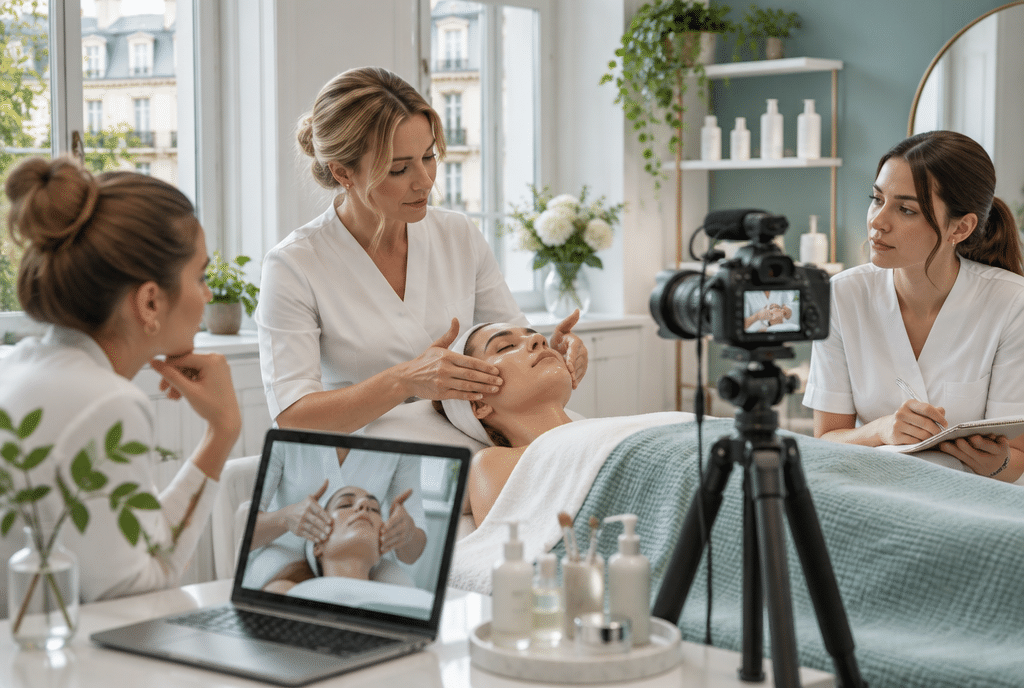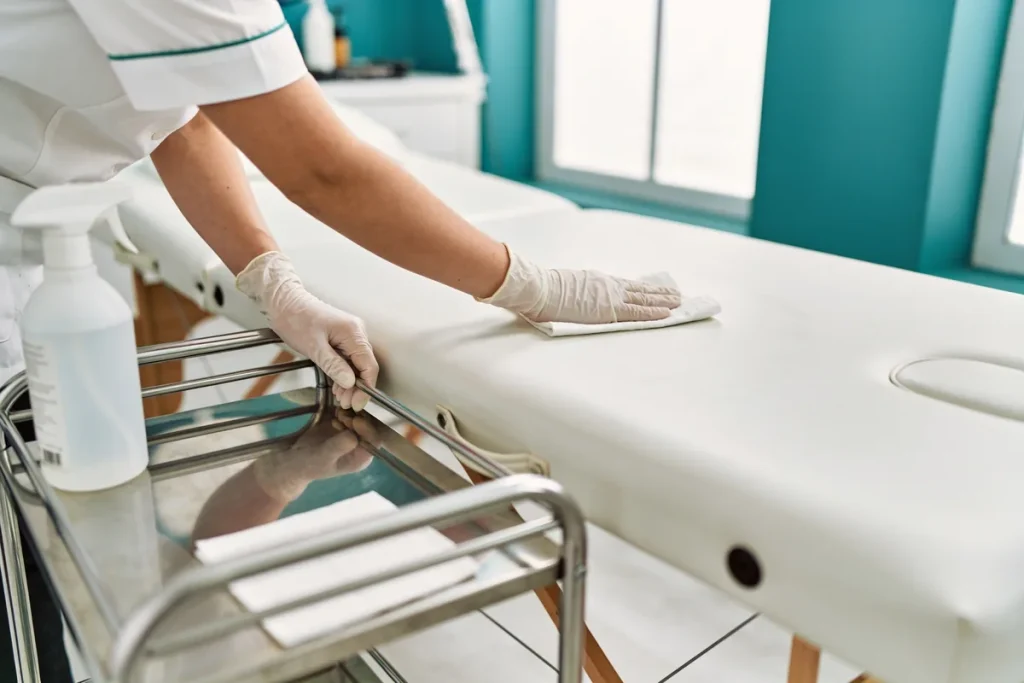

The GIS guidelines for the beauty industry put in order the hygiene requirements for beauty salons in Poland after more than a decade without an implementing act. The Chief Sanitary Inspectorate (GIS) published the document in August 2026, and the September update clarified some of its provisions. For a salon owner the most important thing is that, for the first time in a long while, it is known what an inspector will be looking for.
Why there was a lack of clarity for more than a decade
The detailed sanitary requirements for hairdressing, beauty, tattoo and wellness establishments were regulated by the Regulation of the Minister of Health of 17 February 2004. It applied from May 2004 to January 2012, when it ceased to be binding with the repeal of its statutory basis. Subsequent drafts were not issued. For more than a decade, salons therefore operated without an act that said plainly what the workstation, the circulation of instruments or the documentation should look like.
This did not mean a legal vacuum. The obligation arose, and still arises, from Article 16 of the Polish Act on preventing and combating infections and infectious diseases in humans. People who break the continuity of tissue in the course of their business are obliged to develop, implement and apply procedures that ensure protection against infection. The procedures are to regulate conduct during a treatment, the rules for using equipment subject to sterilisation, skin disinfection and the decontamination of rooms and devices. At the business owner’s request, the state district sanitary inspector may issue an opinion on them.
The obligation to have procedures did not appear in 2026. What is new is the document showing how the inspectorate understands compliance with it.
What the GIS guidelines are and what they are not
The GIS guidelines for the beauty industry, formally titled hygiene and sanitary recommendations and requirements for the provision of services in the beauty industry, describe the legal position as of May 2026. The document is not a legal act and does not hide the fact. It mixes two kinds of content: obligations arising directly from legislation and good practice recommendations, signalled by the phrase “it is recommended”. Telling these layers apart is in practice the most important skill when reading the whole, because it determines what you must implement and what is worth implementing.
Remember too that an inspector works from legislation, not recommendations. The Act on the State Sanitary Inspectorate gives the inspector the right to order shortcomings to be remedied and, in the case of a direct threat, even to close the establishment with immediate effect. The GIS document does, however, show what standard the inspectorate will expect and what it will ask about.
What the inspectorate expects
The list below gathers the requirements worded in firm terms in the GIS document. Some arise directly from the Act, some from good practice that the inspectorate takes as the standard. The legal basis of the obligation remains Article 16 of the Act on preventing infections, and the document shows how the inspector assesses compliance with it.
- Written procedures: each with a title, purpose, scope of application, step-by-step instructions, a date and the signature of the person responsible. A printout alone is not enough, because the Act speaks of developing, implementing and applying procedures.
- Separation of activities: decontamination of instruments separated in space, or at least in time, from services that break the continuity of tissue.
- Ventilation: provided in the rooms where you perform treatments.
- Sterilisation documentation: if you use external sterilisation, you must have confirmation that it was carried out.
- Sterile gloves: for services that break the continuity of tissue.
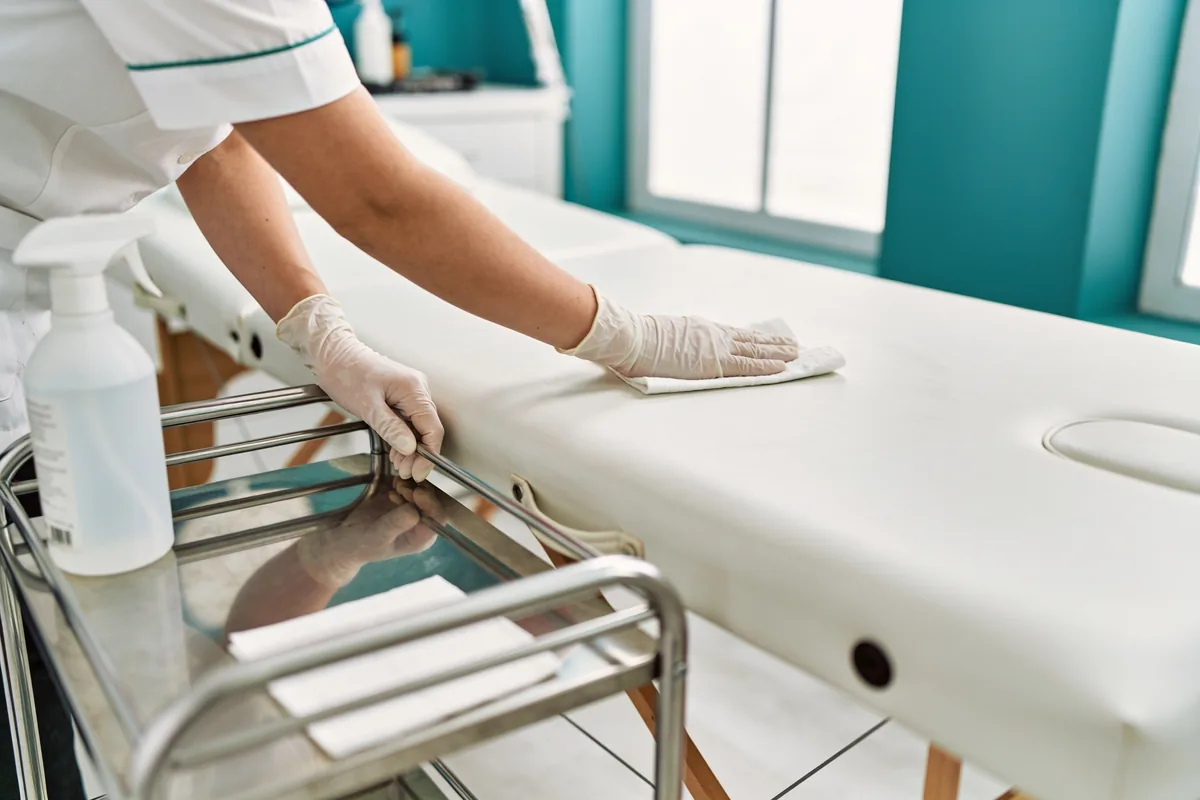
- Waste management: sharps into rigid, labelled containers, removed at least once a day.
What GIS recommends but does not require
In the recommendations layer, the GIS guidelines list, among other things, sterilisation with pressurised steam in devices meeting the PN-EN 13060 standard, biological control of the process at least once a week, an annual technical inspection of the steriliser, and limiting the validity of material packed in paper-film sleeves to two months. Keeping documentation that makes it possible to link specific instruments to a specific client is also recommended.
Formally these are recommendations. In practice it is hard to defend a different standard if an infection occurs and due diligence has to be demonstrated. We set this process out in detail in the article on instrument sterilisation in the beauty salon.
How to implement the GIS guidelines in a few steps
The simplest route is to divide the work into stages. Start with an audit of what you already have, even in the form of a list of the activities performed in the salon, marking which of them break the continuity of tissue. Then describe procedures for those activities, in the language the team speaks on an everyday shift. The third step is training: a procedure that nobody knows protects neither the client nor you. The fourth is registers, that is the place where you record sterilisation, inspections and waste collection.
If you employ staff, include this package in the onboarding of a new person. We wrote about this in the article on how to hire and onboard a cosmetologist. Client records and consents are in turn a separate layer, which we discuss in the article on GDPR in the beauty salon. The full text of the recommendations was published on the website of the Chief Sanitary Inspectorate.
What an inspection looks at first
A fairly repeatable pattern emerges from salons’ accounts after inspections. The inspector starts by asking about procedures and wants to see them, not hear about them. Then they check whether the circulation of instruments described there matches what they see at the workstation: where the dirty instruments are, where the clean ones are, what they are disinfected with, what they are packed in. They ask about the steriliser, the documentation of its inspections and the results of process control. They look at the sharps container and the contract for its collection.
The second group of questions concerns people. Does the team know the procedures, does it have valid medical certificates for sanitary and epidemiological purposes, does it know what to do in the event of a needlestick injury. The third group is the premises: ventilation, washable surfaces, access to a washbasin with hot water, a separate place for staff’s personal belongings. None of these questions is a surprise if you once walk calmly through the salon with the list in your hand.
The most common questions about the GIS guidelines
Do I have to have procedures if I do not perform treatments that break the continuity of tissue?
The obligation under Article 16 of the Act applies to people who break the continuity of tissue. With exclusively superficial treatments the formal obligation is narrower, but the inspectorate assesses general hygiene anyway, and procedures put the team’s work in order.
Can the sanitary inspectorate close a salon after an inspection?
The inspector can order shortcomings to be remedied and, in the event of a direct threat to health, close the establishment with immediate effect. This is a last resort, used for serious irregularities.
Are the GIS guidelines mandatory?
The GIS guidelines are not a legal act, so they do not create sanctions in themselves. They do, however, describe the standard to which the inspectorate will refer and, in the event of a dispute, so will an expert witness and an insurer.
For the salon in brief: the obligation to implement hygiene procedures arises from the Act and has applied for years. The 2026 GIS guidelines show how the inspectorate understands compliance with it. Start with a list of activities, then describe the procedures, train the team and keep registers.
Do you need support in implementing the GIS guidelines and equipping the decontamination zone? Book a free consultation and see Este Group training.